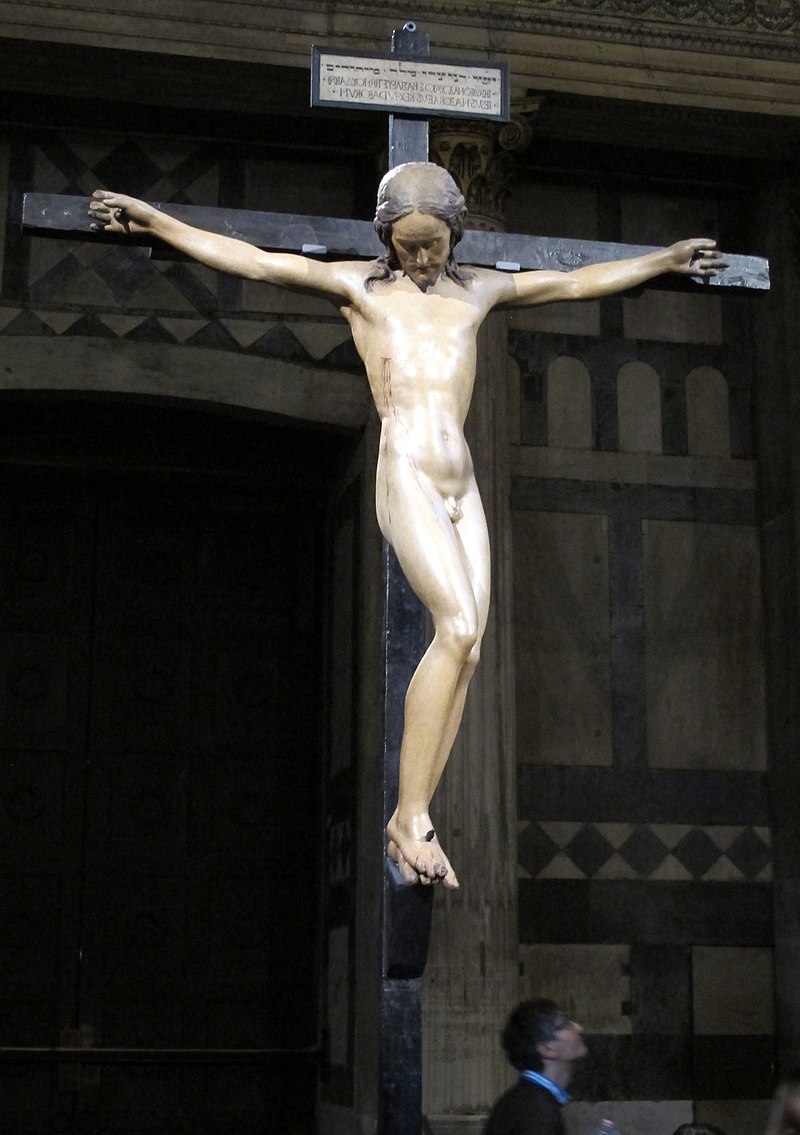
Michelangelo's Crucifix: An Artistic and Scientific Milestone in Renaissance Florence
Italy
Art
Science
3 min read
Updated By: History Editorial Network (HEN)
Published:
Updated:
Michelangelo, during his early years, demonstrated an exceptional talent for sculpture and a keen interest in anatomy. His dedication to understanding human form led him to conduct anatomical studies in the church of Santo Spirito in Florence. As an expression of gratitude for the opportunity to study cadavers, he carved a polychrome wooden crucifix and presented it to the prior of the church. This act not only strengthened his relationship with the church but also showcased his skill in creating lifelike representations, enhancing his reputation as an emerging artist.
The crucifix highlighted Michelangelo's ability to combine artistic skill with scientific observation. His anatomical studies provided him with a precise understanding of human anatomy, directly influencing his sculptural work. This deepened knowledge is evident in the naturalistic details of the crucifix, which contributed to the development of his distinctive style known for its realism and emotional expression.
This moment marked a significant phase in Michelangelo's career, reflecting his commitment to both art and science. It also underscored the importance of support and opportunities provided by institutions like the church in the nurturing of Renaissance artists.
#Michelangelo #RenaissanceArt #AnatomyStudies #Florence #ChurchofSantoSpirito #ArtAndScience #HumanForm #MoofLife
Explore the Life Moments of
 AI Twin