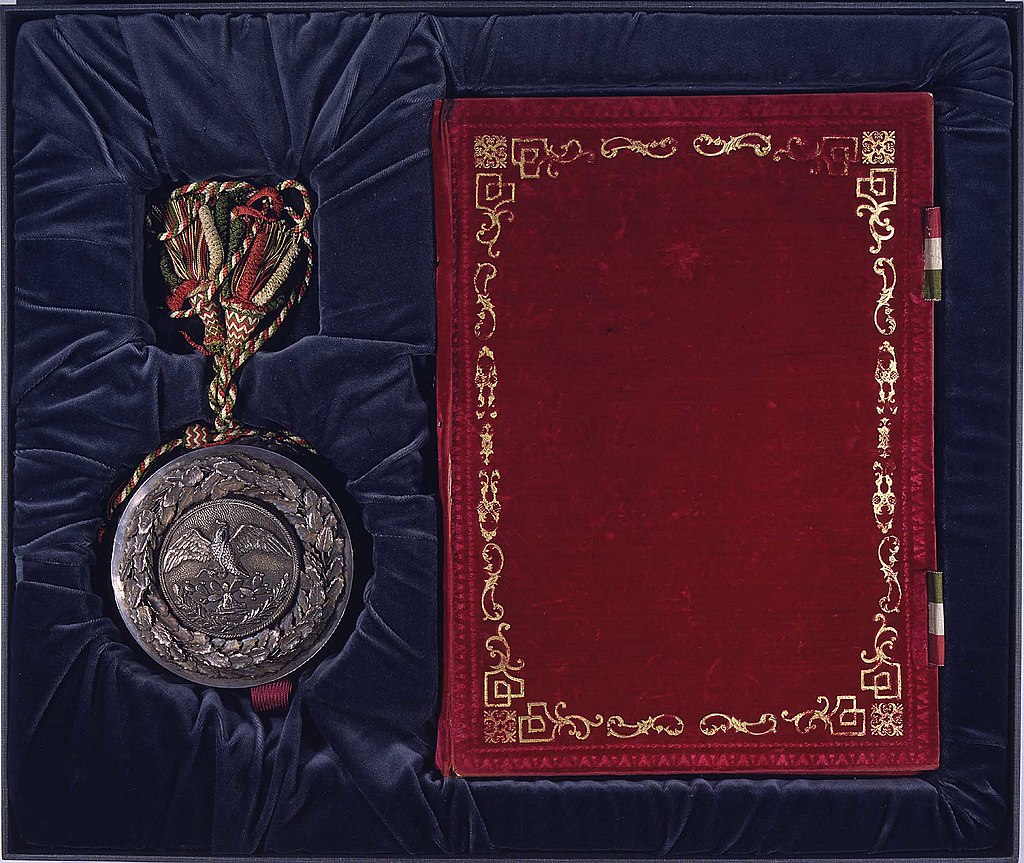
War-ending treaty cedes territory to the United States after the Mexican-American War's conclusion.
Mexico

Political
Global Trade
3 min read
Updated By: History Editorial Network (HEN)
Published:
Following the Mexican-American War, the Treaty of Guadalupe Hidalgo was signed, handing over nearly half of Mexico's territory to the United States. The acquisition included present-day California, Nevada, Utah, and parts of Colorado, Arizona, New Mexico, and Wyoming. This treaty was a result of Mexico being defeated and forced to negotiate terms that favored the U.S., leading to the establishment of the current U.S.-Mexico border.
The impact of this treaty was significant, marking the end of territorial disputes between the two nations. It also set the stage for the U.S. expanding its territory to the Pacific Ocean and the eventual annexation of the new territories. However, for Mexico, the loss of such vast land had lasting consequences, including impacting their economy, politics, and national identity.
The Treaty of Guadalupe Hidalgo remains a contentious issue in Mexican and American history, with debates over its fairness, legality, and implications on both nations. Nonetheless, it reshaped the map of North America and has influenced relations between Mexico and the United States to this day.
#TreatyofGuadalupeHidalgo #MexicanAmericanWar #TerritorialCession #USMexicoRelations
Primary Reference
Treaty of Guadalupe Hidalgo (1848) | National Archives

Explore the Life Moments of
 AI Twin