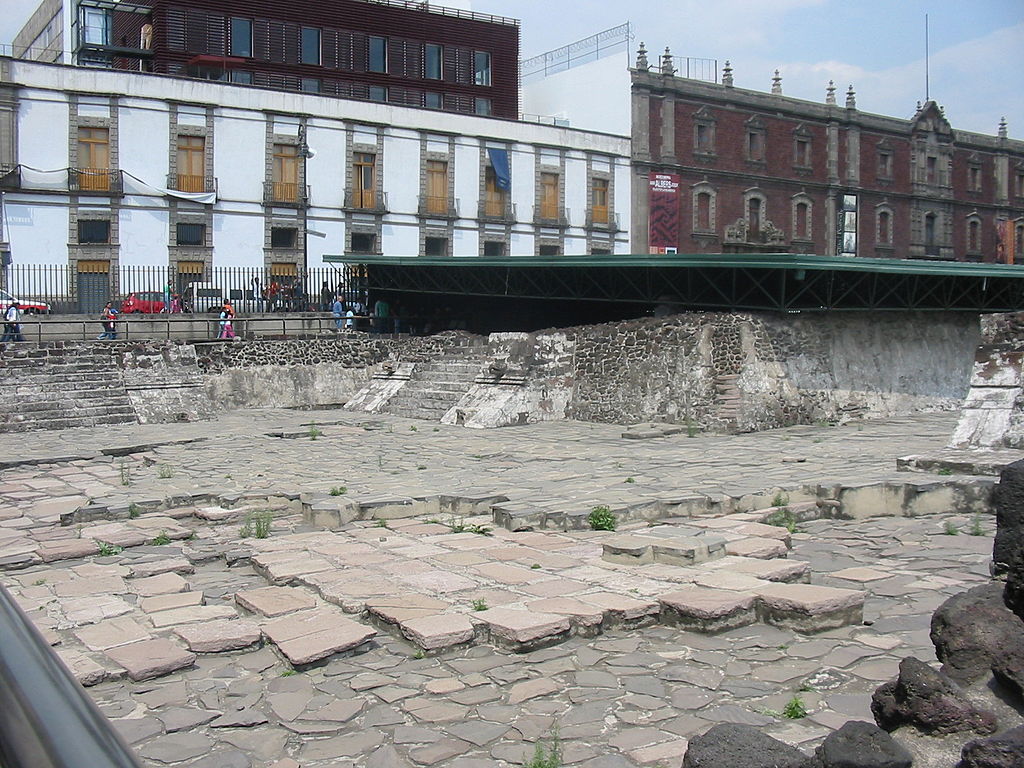
Building the Templo Mayor in Aztec capital, Tenochtitlan reflects ancient Aztec religious practices and beliefs.
Mexico
Cultural Heritage
3 min read
Updated By: History Editorial Network (HEN)
Published:
Updated:
In 1325, the Aztecs established the city of Tenochtitlan on an island in Lake Texcoco. As the capital of the Aztec empire, Tenochtitlan became a center of political, religious, and cultural life. At the heart of the city stood the Templo Mayor, a massive temple dedicated to the Aztec gods Huitzilopochtli and Tlaloc.
Construction of the Templo Mayor was a monumental undertaking, symbolizing the power and wealth of the Aztec civilization. The temple was built in several stages, with each new ruler adding to its grandeur. The structure consisted of two pyramids, one dedicated to Huitzilopochtli, the god of war, and the other to Tlaloc, the god of rain and agriculture.
The Templo Mayor served as a focal point for religious ceremonies, including human sacrifices believed to ensure the gods' favor and the empire's prosperity. The temple's architectural design and the elaborate rituals performed there reflected the Aztecs' complex cosmology and worldview.
The construction of the Templo Mayor in Tenochtitlan underscores the Aztecs' engineering prowess, religious devotion, and hierarchical social structure. The temple's significance endured until the arrival of the Spanish conquistadors in the early 16th century.
#AztecEmpire #Tenochtitlan #TemploMayor #AztecReligion #CulturalHeritage
Primary Reference
Tenochtitlan: Templo Mayor | Essay | The Metropolitan Museum of ...

Explore the Life Moments of
 AI Twin