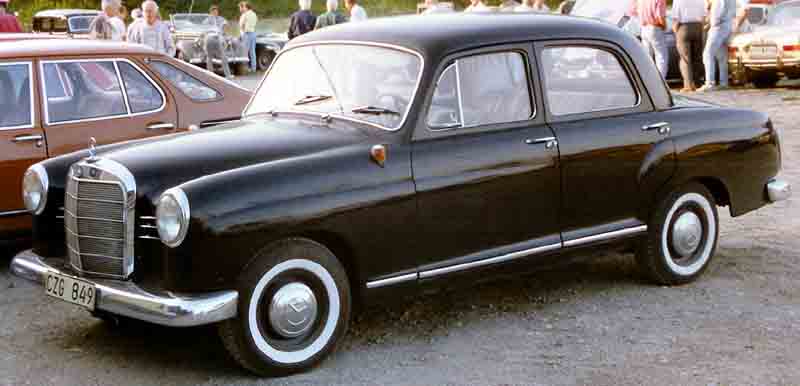
Overview of Mercedes-Benz Ponton Models
Germany
Automobile
Mercedes-Benz
4 min read
Updated By: History Editorial Network (HEN)
Published:
Updated:
The Mercedes-Benz Ponton models represent a significant era in automotive design and engineering, produced from 1953 to 1962. The term 'Ponton' is derived from the pontoon-shaped bodywork that characterized these vehicles, marking a departure from the more angular designs of earlier models. The Ponton series included various configurations, such as sedans and coupes, and was notable for its unibody construction, which enhanced structural integrity and safety. This design innovation was part of a broader trend in the automotive industry towards more streamlined and efficient vehicle designs. The Ponton models were equipped with advanced features for their time, including independent front suspension and a range of engine options, which contributed to their reputation for performance and comfort.
The impact of the Ponton models extended beyond their immediate popularity. They played a crucial role in establishing Mercedes-Benz as a leader in luxury automotive manufacturing. The series included several notable variants, such as the 300, known as the 'Adenauer Mercedes,' which was favored by politicians and dignitaries. The Ponton models also laid the groundwork for future Mercedes-Benz designs, influencing the aesthetic and engineering principles of subsequent generations. The production of these vehicles coincided with a period of economic recovery and growth in the automotive market, which further solidified Mercedes-Benz's position in the luxury segment. Overall, the Ponton series is remembered not only for its distinctive design but also for its contributions to automotive safety and performance standards.
#mooflife
#MomentOfLife
#Mercedes-benz
#PontonModels
#LuxuryCars
#AutomotiveDesign
#CarHistory

Explore the Life Moments of
 AI Twin