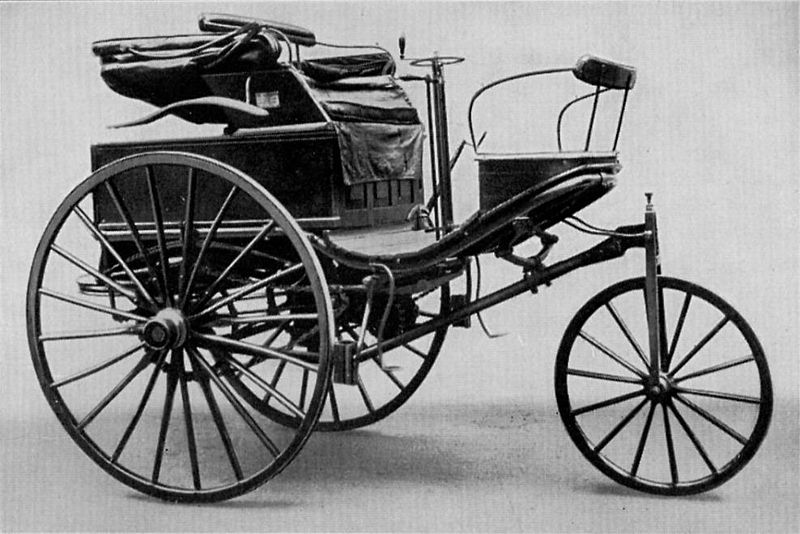
Karl Benz Patents the Benz Patent-Motorwagen
Germany
Automotive History
Engineering Innovations
Inventions
4 min read
Updated By: History Editorial Network (HEN)
Published:
Updated:
Karl Benz is recognized for creating the first practical automobile powered by an internal combustion engine, known as the Benz Patent-Motorwagen. This vehicle marked a pivotal development in automotive engineering and is considered the first true automobile. The design and construction of the Patent-Motorwagen were made possible through the financial support of Bertha Benz, who provided her dowry to fund the project. The Patent-Motorwagen featured a simple yet effective design, including a rear-mounted engine, a tubular steel frame, and wooden wheels, which set the foundation for future automotive designs. The vehicle's innovative engineering included a single-cylinder four-stroke engine, which was capable of producing 0.75 horsepower, allowing it to reach speeds of up to 10 miles per hour. This invention not only demonstrated the feasibility of motorized transport but also laid the groundwork for the automotive industry as we know it today.
The impact of the Benz Patent-Motorwagen extended beyond its technical specifications. It represented a shift in transportation, moving from horse-drawn carriages to motorized vehicles, which would eventually transform society. The introduction of the automobile facilitated greater mobility, enabling people to travel longer distances more efficiently. This innovation spurred the development of infrastructure, such as roads and gas stations, and contributed to the growth of industries related to automotive manufacturing and maintenance. The success of the Patent-Motorwagen also inspired other inventors and entrepreneurs, leading to a competitive automotive market. Today, the legacy of Karl Benz and his invention is evident in the global automotive industry, which continues to evolve with advancements in technology and sustainability.
#mooflife
#MomentOfLife
#KarlBenz
#BenzPatent-motorwagen
#AutomobileHistory
#InternalCombustionEngine
#AutomotiveInnovation

Explore the Life Moments of
 AI Twin