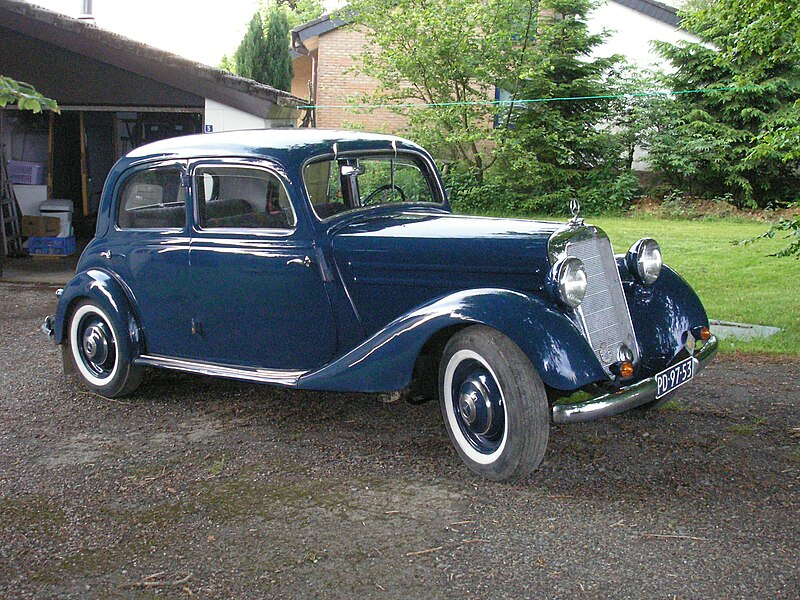
Mercedes-Benz W136 Overview and Features
Germany
Automotive
Mercedes-Benz
4 min read
Updated By: History Editorial Network (HEN)
Published:
Updated:
The Mercedes-Benz W136, also known as the 170 series, was a compact car produced by Mercedes-Benz from 1936 to 1942 and then again from 1947 to 1955. This model was significant in the company's history, marking a shift towards more accessible vehicles for a broader market. The W136 was designed to cater to the needs of families and individuals looking for reliable transportation during a time of economic challenges. Its production spanned two distinct periods, reflecting the brand's resilience and adaptability in the automotive industry. The W136 was equipped with a four-cylinder engine, which provided a balance of performance and efficiency, making it a popular choice among consumers. The vehicle's design emphasized practicality, with a spacious interior and a robust build that contributed to its reputation for durability.
The impact of the W136 on the automotive market was notable, as it helped establish Mercedes-Benz as a manufacturer of compact cars that did not compromise on quality. The model's success can be attributed to its combination of engineering excellence and affordability, which appealed to a wide range of customers. By the end of its production run, the W136 had become one of the company's most successful models, contributing significantly to Mercedes-Benz's brand identity. The legacy of the W136 continues to influence the design and engineering philosophies of the company, as it laid the groundwork for future models that would blend luxury with practicality. Overall, the W136 represents a pivotal chapter in the history of Mercedes-Benz, showcasing the brand's commitment to innovation and customer satisfaction.
#mooflife
#MomentOfLife
#Mercedes-benz
#W136
#AutomotiveHistory
#CompactCars
#CarFeatures

Explore the Life Moments of
 AI Twin