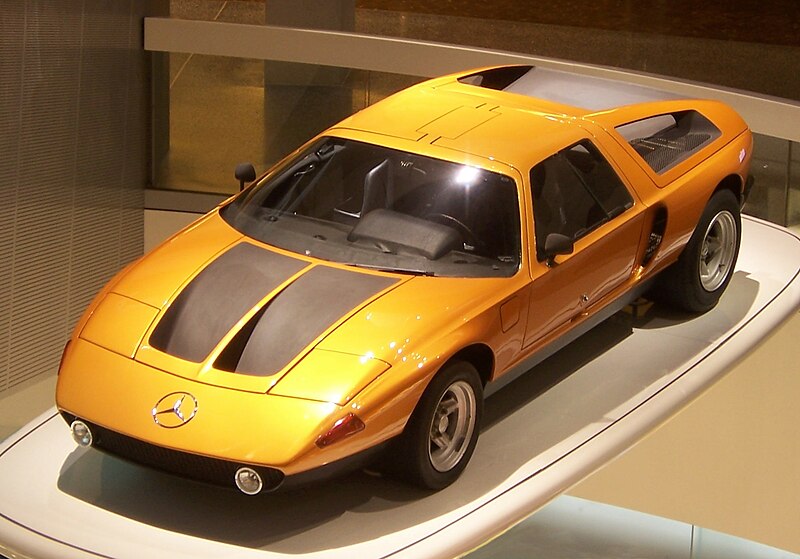
Innovative Mercedes-Benz C111 Experimental Vehicle
Germany
Automotive
Innovation
Mercedes-Benz
4 min read
Updated By: History Editorial Network (HEN)
Published:
Updated:
The Mercedes-Benz C111 was an experimental vehicle developed during the late 1960s and early 1970s, showcasing the brand's commitment to innovation and performance. This vehicle was notable for its incorporation of a Wankel rotary engine, which was a departure from traditional piston engines. The design of the C111 emphasized advanced aerodynamics, which contributed to its performance and efficiency. The vehicle was part of a broader trend in the automotive industry during this period, where manufacturers were exploring new technologies and designs to enhance vehicle capabilities. The C111 served as a testbed for various technologies that would later influence production models, particularly in terms of engine design and aerodynamic efficiency.
The impact of the C111 extended beyond its immediate performance metrics. It represented a significant step in Mercedes-Benz's research and development efforts, allowing the company to experiment with lightweight materials and innovative engineering solutions. The vehicle's design and performance characteristics were instrumental in shaping future models, particularly in the S-Class lineup, which would later incorporate some of the advanced features tested in the C111. Although the C111 never entered mass production, its legacy is evident in the continued pursuit of performance and efficiency in modern automotive engineering. The exploration of rotary engines and aerodynamic designs in the C111 laid the groundwork for future innovations in the automotive sector, influencing both luxury and performance vehicles.
#mooflife
#MomentOfLife
#Mercedes-benz
#C111
#ExperimentalVehicle
#WankelEngine
#AutomotiveInnovation

Explore the Life Moments of
 AI Twin