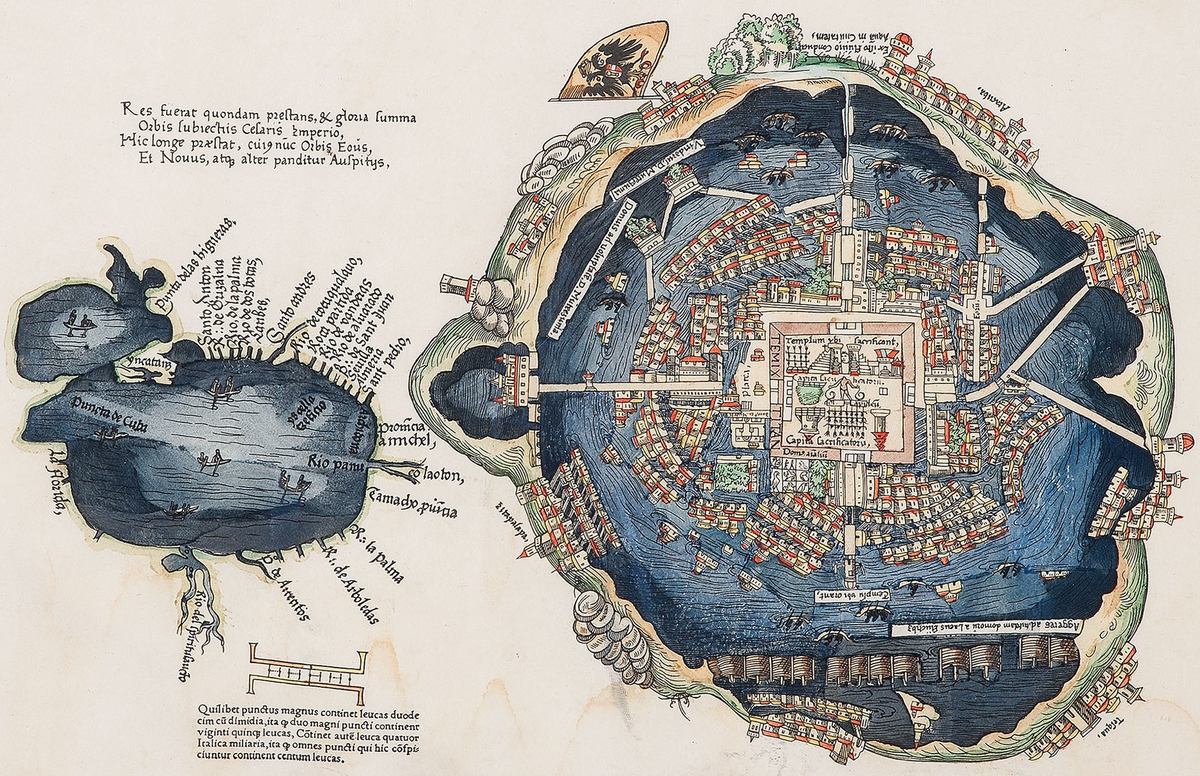
Fall of Aztec Capital Tenochtitlan
Tenochtitlan (modern-day Mexico City, Mexico) and Maya regions (Yucatán Peninsula and Guatemala)
Colonialism
Mesoamerican Studies
3 min read
Updated By: History Editorial Network (HEN)
Published:
Updated:
The fall of Tenochtitlan marked a pivotal event in the history of the Aztec Empire and the Spanish conquest of Mesoamerica. Tenochtitlan, the capital of the Aztec Empire, was a large and sophisticated city located on an island in Lake Texcoco. It was known for its impressive architecture, complex social structure, and extensive trade networks. The city was home to a population that was estimated to be in the hundreds of thousands, making it one of the largest cities in the world at the time. The Spanish, led by Hernán Cortés, arrived in the region with a small force but were able to leverage alliances with various indigenous groups who were discontent with Aztec rule. This strategic alliance was crucial in the eventual siege and capture of Tenochtitlan. The Spanish forces, equipped with advanced weaponry and tactics, engaged in a series of battles against the Aztecs, who were ultimately unable to withstand the combined military might of the Spanish and their allies. The siege lasted several months, leading to significant casualties and the eventual surrender of the city. The fall of Tenochtitlan resulted in the collapse of the Aztec Empire and the establishment of Spanish colonial rule in the region, which had lasting effects on the indigenous populations and the cultural landscape of Mesoamerica.
#mooflife
#MomentOfLife
#Tenochtitlan
#AztecEmpire
#SpanishConquest
#HernánCortés
#Mesoamerica
Primary Reference
Spanish conquest of the Maya

Explore the Life Moments of
 AI Twin