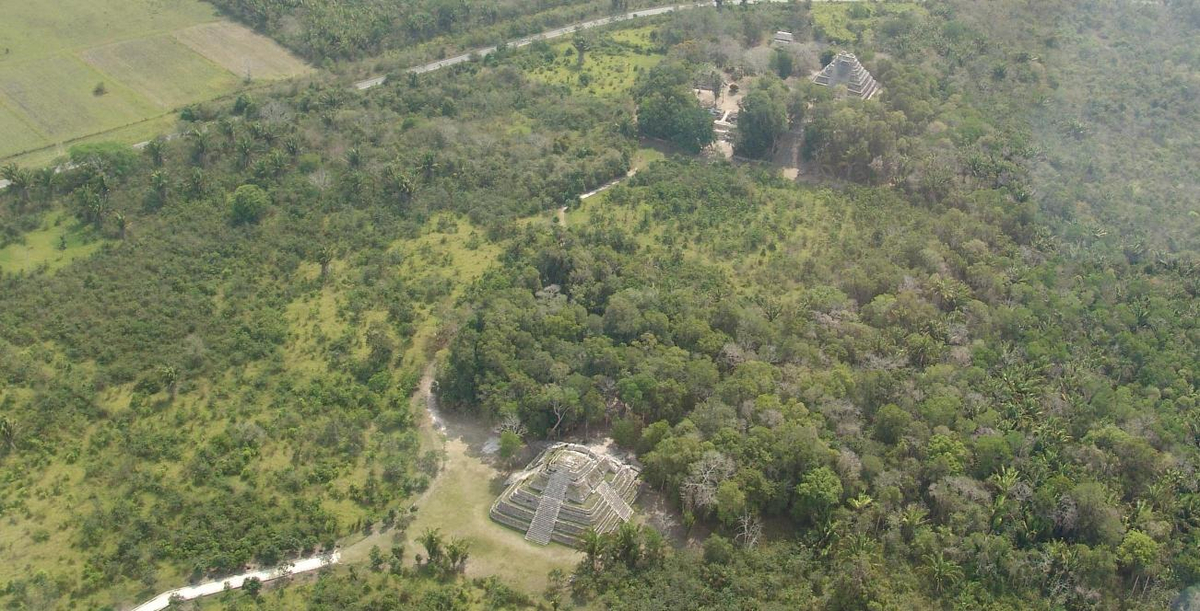
The Maya city and temple complex of Chacchoben is built.
Chacchoben, Quintana Roo, Mexico
MomentsOfLife
MoofLife
3 min read
Updated By: History Editorial Network (HEN)
Published:
Updated:
The construction of the Maya city and temple complex of Chacchoben, located in the modern-day Mexican state of Quintana Roo, dates back to around 200 BCE, though its most prominent structures were built during the Classic Period around 700 CE. Chacchoben, meaning "Place of Red Corn," emerged as a significant regional center, with temples, plazas, and ceremonial platforms that reflected the architectural and religious sophistication of the Maya civilization. Nestled in the Yucatán Peninsula’s dense jungle, the site was strategically built to align with astronomical events, particularly the solstices, which played a key role in Maya agricultural and ritual life.
The temples of Chacchoben, characterized by their stepped pyramids and stucco finishes, served as sacred spaces for offerings, religious ceremonies, and elite gatherings. These structures indicate a community deeply connected to both the natural and cosmic world, as well as a social hierarchy governed by priest-kings and ritual specialists. Today, the well-preserved ruins of Chacchoben offer a glimpse into the spiritual and daily lives of the Maya, showcasing their enduring legacy through architecture that continues to inspire awe and curiosity.
#ChacchobenMysteries
#AncientTemples
#MayaArchitecture
Primary Reference
One of Our Favorite Ruins and the Most Popular in the Costa Maya

Explore the Life Moments of
 AI Twin