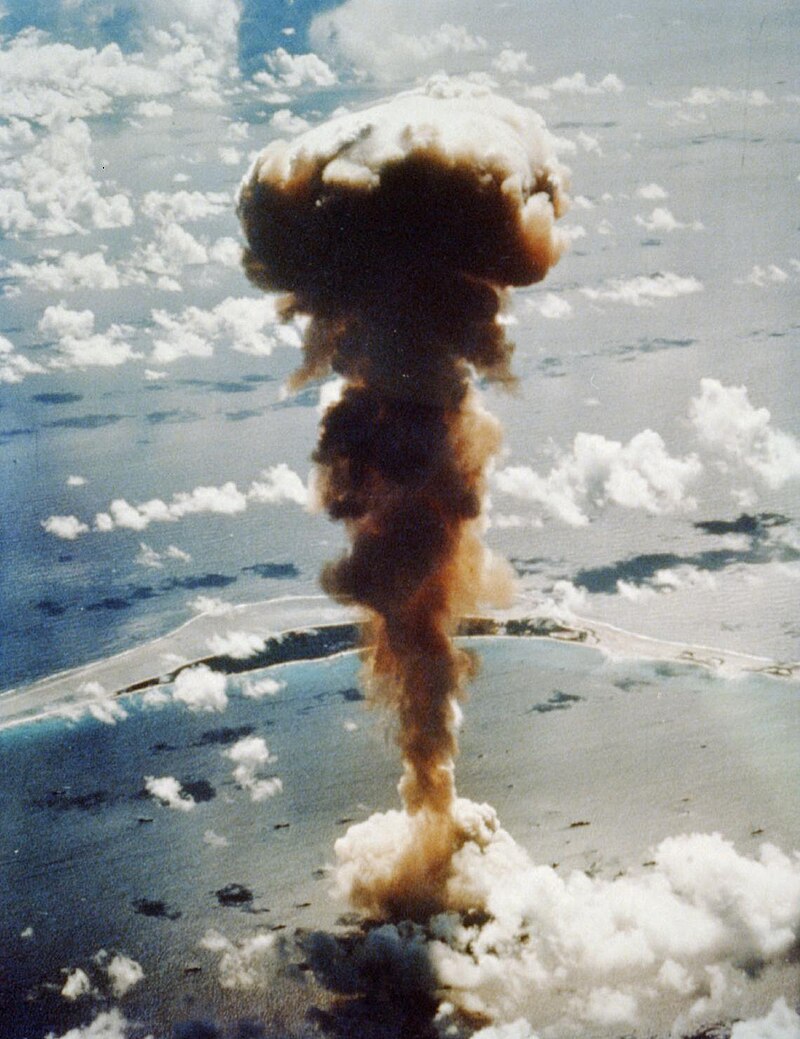
The Impact of Post-War Nuclear Testing on the Environment and Communities of Bikini and Enewetak Atolls
Marshall Islands
Nuclear Testing
Environmental Impact
3 min read
Updated By: History Editorial Network (HEN)
Published:
Updated:
Between 1946 and 1958, the United States conducted a series of 67 nuclear tests at Bikini Atoll and Enewetak Atoll, marking a significant chapter in the history of nuclear weapons development. The tests were part of the Pacific Proving Grounds, a designated area for testing nuclear devices, which was established following World War II. The first of these tests, known as Operation Crossroads, commenced in 1946 at Bikini Atoll. This operation involved the detonation of atomic bombs to assess their effects on naval vessels and military strategies. The local population of Bikini Atoll was forcibly evacuated to facilitate these tests, leading to long-term consequences for the residents and their environment. The tests not only demonstrated the destructive power of nuclear weapons but also raised ethical and environmental concerns that continue to resonate today. The United States' administration of the Trust Territory of the Pacific Islands, which included the Marshall Islands, further complicated the geopolitical landscape of the region. The legacy of these nuclear tests remains a critical topic in discussions about nuclear policy, environmental justice, and the rights of indigenous peoples. #mooflife #mof #MomentOfLife #NuclearTests #BikiniAtoll #EnewetakAtoll #OperationCrossroads #PacificProvingGrounds
Primary Reference
Marshall Islands
Explore the Life Moments of
 AI Twin