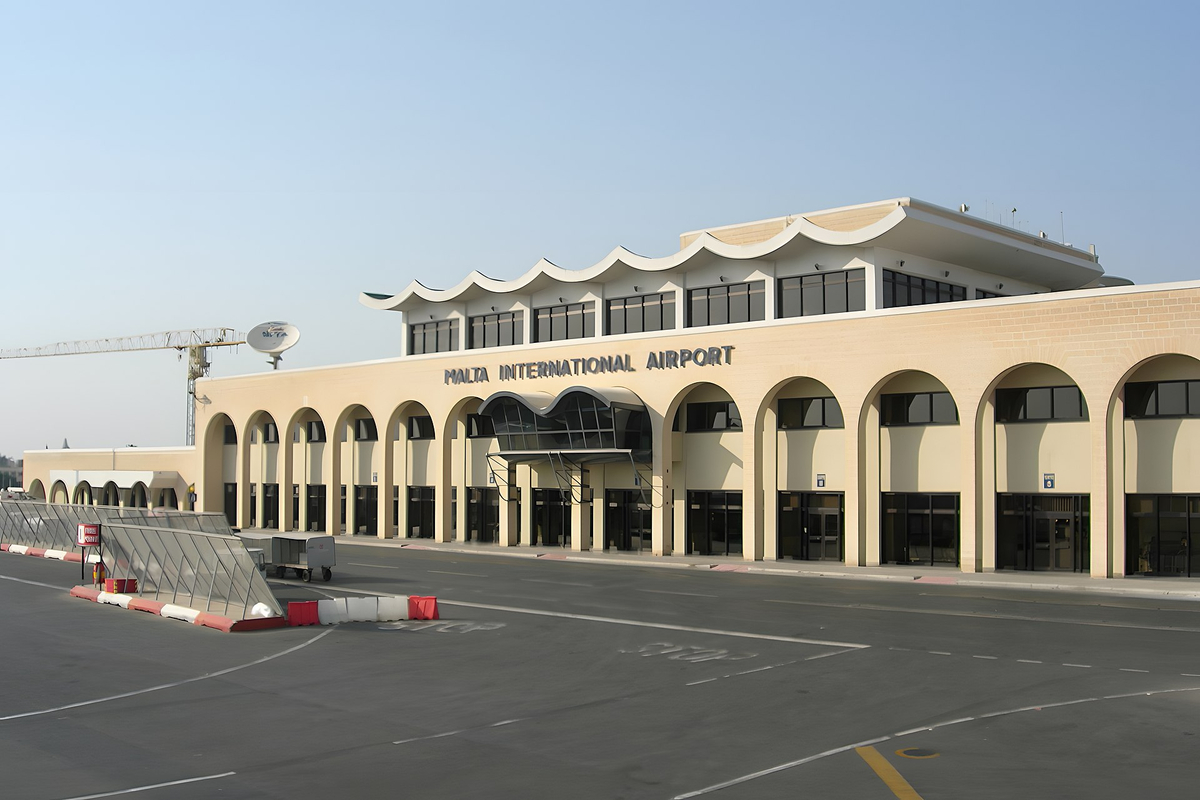
Grand Opening of International Airport in Malta
Malta
Infrastructure
Economic Growth
6 min read
Updated By: History Editorial Network (HEN)
Published:
The Malta International Airport commenced operations following a comprehensive construction and planning phase. The establishment of this airport marked a pivotal development in Malta's infrastructure and economy, designed to replace the older Luqa Airport. The new airport was built to accommodate the increasing air traffic and to sustain Malta’s growing reputation as a tourist destination.
Strategically located between the villages of Luqa and Gudja, the airport was conceptualized to provide enhanced facilities and services. With a modern terminal, the airport introduced better passenger handling capabilities and adhered to international aviation standards. Its construction included advanced security systems, improved baggage handling, and more efficient customs processing.
In terms of impact, the opening of the Malta International Airport significantly boosted tourism, one of the key sectors in Malta's economy. The airport provided better connectivity to Europe, North Africa, and the Middle East, further integrating Malta into global travel networks. As a result, it facilitated higher tourist arrivals, which in turn promoted growth in the hospitality and services industries. The local job market benefited directly through the creation of employment opportunities in various sectors such as ground services, security, retail, and aviation management.
The architectural design and operational efficiency of the airport underscored Malta’s commitment to modernity and progress. The airport played a crucial role in establishing Malta as an accessible destination for international events, business ventures, and tourism activities. In the subsequent years, Malta International Airport saw incremental upgrades and expansions to keep pace with technological advancements and passenger demand.
Statistics reflect the airport’s role in boosting passenger numbers and flight movements. The increasing flow of visitors contributed to the growth of ancillary industries and the broader economy. Malta International Airport quickly became a central hub for Air Malta, the national airline, among other international carriers.
In conclusion, the opening of Malta International Airport represented a forward step in Malta's development, with lasting effects on its global connectivity and economic landscape. The airport continues to serve as a vital gateway for millions of passengers annually, underlining Malta’s emergence as a significant player in international travel and commerce.
#MaltaInternationalAirport #TourismBoost #Infrastructure #EconomicGrowth #GlobalConnectivity #MoofLife
Primary Reference
1992: A Key Milestone for Malta International Airport ...

Explore the Life Moments of
 AI Twin