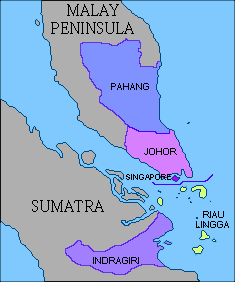
Territorial Exchange: Malacca for Bencoolen
Malaysia

Political
Global Trade
5 min read
Updated By: History Editorial Network (HEN)
Published:
The Anglo-Dutch Treaty marked a pivotal moment in the colonial history of Southeast Asia, fundamentally restructuring the balance of power between the British and the Dutch. The Dutch relinquished control of Malacca, a strategic trading post on the Malay Peninsula, to the British. In return, the British ceded Bencoolen, located on the west coast of Sumatra, to the Dutch.
This exchange was a result of pressing economic and strategic interests. Malacca, long considered crucial due to its position along the Strait of Malacca, had considerable influence over East-West maritime trade routes. Control over this area allowed the British to consolidate their dominance in the region, enhancing their existing positions in Penang and Singapore. For the Dutch, Bencoolen was seen as less valuable compared to their established strongholds on Java and other parts of the archipelago. By securing Sumatra, the Dutch aimed to reinforce their authority in the Indonesian archipelago.
The agreement smoothed over territorial disputes that had persisted since the 17th century, leading to a more formalized delineation of spheres of influence. This satisfied both colonial powers' commitments to peace and their economic ambitions.
The treaty's impact reverberated through the Malay Peninsula and Sumatra. For Malacca, the shift in power brought significant changes in governance and trade policies. The local population experienced new administrative practices and economic strategies aimed at integrating the city into the British colonial network. On the other hand, the Dutch intensified their exploitation of Sumatra's resources, focusing on agricultural and mineral exploitation to bolster their income.
As the British solidified control over Malacca, they enhanced its infrastructure, contributing to its significance as a British base in the region. The Dutch, meanwhile, continued to expand their colonial reach within Indonesia, ensuring that Sumatra aligned more closely with their overall strategic and economic plans.
The treaty's legacy is visible in the modern geopolitical landscape of Southeast Asia, highlighting the enduring consequences of colonial agreements. The reconfiguration of power initiated by this treaty has had lasting effects on the territorial and political dynamics in the region.
#AngloDutchTreaty #ColonialHistory #Malaysia #Malacca #Bencoolen #GeopoliticalShift #MoofLife
Primary Reference
Anglo-Dutch Treaty of 1824 - Wikipedia

Explore the Life Moments of
 AI Twin