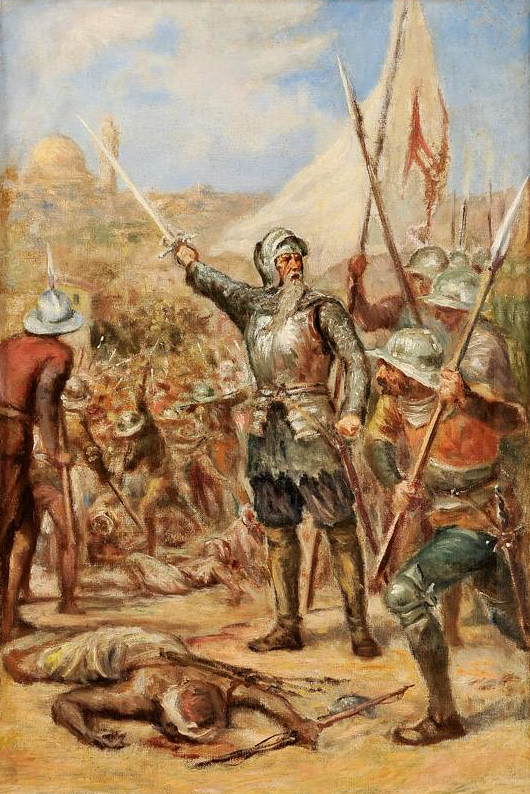
Portuguese Conquest of Malacca
Malaysia

Global Trade
5 min read
Updated By: History Editorial Network (HEN)
Published:
The Portuguese capture of Malacca, led by Afonso de Albuquerque, marked a pivotal turning point in Southeast Asian history. Malacca, a strategic maritime trading hub, was the seat of the Malacca Sultanate, flourishing due to its prime location along the Malacca Strait, which served as a conduit for spice trade between the East and West. Control over Malacca was highly sought after by European powers for its economic and strategic value.
The Portuguese Empire, under King Manuel I, aimed to dominate the spice trade and establish a stronghold in Asia. They identified Malacca as a critical target due to its wealth and its role as a commercial nexus. Afonso de Albuquerque, a seasoned military commander, led a fleet to seize the city. The Portuguese forces, equipped with advanced naval artillery and combat strategies, conducted a well-coordinated attack.
The assault on Malacca was decisive. Despite resistance from Sultan Mahmud Shah, the ruling monarch, the Sultanate's forces were overwhelmed by Portuguese firepower and tactical superiority. The capture of the city involved a blend of naval bombardment and ground assault, effectively crippling the Sultanate's defenses and compelling its surrender.
Following the seizure of Malacca, the Sultanate's authority dissolved, and Portuguese control was established over the city. This conquest allowed the Portuguese to dominate the region's spice trade, significantly impacting the economic landscape of Southeast Asia. The fall of Malacca also facilitated broader European intervention and colonization in the Asian maritime sphere.
The establishment of Portuguese rule in Malacca brought about significant cultural and economic changes. The Portuguese fortified the city and introduced European architectural styles, Christianity, and new commercial practices. Additionally, this event shifted the balance of power in the region, as neighboring states had to navigate the newfound Portuguese influence.
This historical episode underscores the beginnings of European colonialism in Southeast Asia, highlighting the intersection of military conquest and economic ambition. It remains a key chapter in the history of Malaysia, influencing its cultural and historical trajectory.
#PortugueseConquest #MalaccaCapture #AfonsoDeAlbuquerque #MalaysiaHistory #SpiceTrade #Colonialism #MoofLife
Primary Reference
Capture of Malacca (1511) - Wikipedia

Explore the Life Moments of
 AI Twin