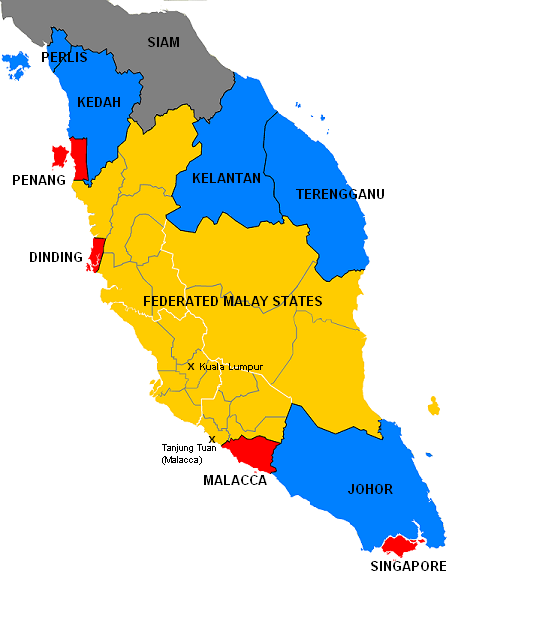
Federated States Unite: Formation of FMS under Single Administration
Malaysia
Political
Economic Downturn
5 min read
Updated By: History Editorial Network (HEN)
Published:
The Formation of the Federated Malay States (FMS) arose from a period of colonial expansion and administrative consolidation by the British Empire in Southeast Asia. The British aimed to create a more organized and efficient system to oversee the Malay Peninsula's numerous semi-autonomous states. Prior to this event, the states of Selangor, Perak, Negeri Sembilan, and Pahang were each governed by their rulers with varying degrees of British advisory influence.
The decision to unify these states under a single administrative structure was driven by the need for streamlined governance, especially in matters of economic activity like tin mining, which was a significant industry in this region. Through a structured federal system, the British hoped to enhance infrastructural development, facilitate better resource management, and improve financial stability across the states.
The FMS arrangement centralized administrative powers and introduced a Resident General to oversee the federated states. This act facilitated uniform policies in taxation, law enforcement, public works, and more. Moreover, it allowed for the pooling of revenues, which in turn funded major projects, including the development of railways and roads, improving connectivity and commerce within the region.
While the creation of the FMS helped raise efficiency and development standards, it also led to significant changes in local governance. The traditional rulers retained authority over matters of local customs and religion, but significant political and economic control shifted to British administrators. This dual governance structure marked the beginning of a more formalized and structured colonial administration in Malaya.
Statistical data from the early years post-formation indicate a marked increase in infrastructural development and economic output. For instance, railway mileage expanded considerably, improving transport times and boosting trade. Tin production surged, contributing significantly to the global market and regional economy.
The establishment of the FMS set a precedent for future administrative policies in Malaya, eventually influencing the formation of modern Malaysia. It highlighted the complexities and impacts of colonization, showcasing both development strides and cultural shifts.
#FormationofFMS #ColonialHistory #EconomicChange #Malaysia #AdministrativeConsolidation #InfrastructureDevelopment #MoofLife
Primary Reference
Federated Malay States - Wikipedia

Explore the Life Moments of
 AI Twin