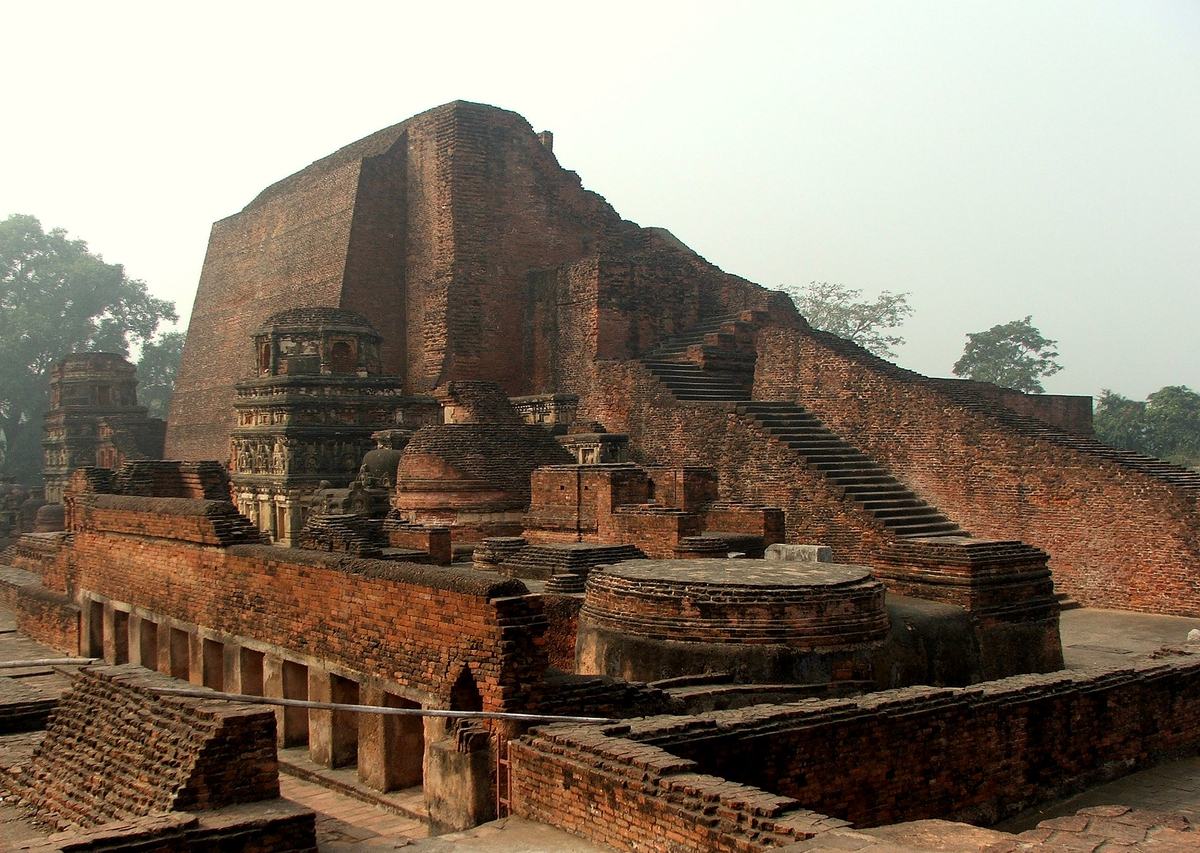
Arrival of the Mahayana Buddhist scholar Atisha in Sumatra, whose teachings had a significant influence on the development of Buddhism in Malaysia.
Malaysia
8 min read
Updated By: History Editorial Network (HEN)
Published:
In 1013 CE, the renowned Mahayana Buddhist scholar Atisha, also known as Dipankara Srijnana, arrived in Sumatra, an event that had a lasting impact on the development of Buddhism in the region, including what is now Malaysia. Atisha's visit to Sumatra was a significant chapter in the spread of Buddhist teachings across Southeast Asia, contributing to the religious and cultural landscape of the Malay Archipelago.
Background: Atisha's Journey
Atisha was born in 982 CE in what is now Bangladesh, during a period when Buddhism was flourishing in the Indian subcontinent and beyond. He became one of the most prominent scholars of the Mahayana tradition, particularly known for his teachings on the stages of the path to enlightenment (Lamrim) and his efforts to reform and revitalize Buddhism.
Atisha was a devout practitioner and scholar who sought to deepen his understanding of Buddhism through study and practice. His quest for knowledge and spiritual guidance eventually led him to the island of Sumatra, which was part of the Srivijaya Empire, a powerful maritime kingdom that was a major center of Buddhist learning and culture in Southeast Asia.
Atisha in Sumatra
At the time of Atisha's arrival in 1013, Sumatra was home to the Srivijaya Empire, which had established itself as a dominant force in the region, with strong ties to the Buddhist world. The Srivijaya Empire was known for its vibrant trade networks, which extended as far as India, China, and the Middle East, as well as for its role as a hub of Buddhist scholarship.
Atisha came to Sumatra specifically to study under the great Buddhist master Dharmakirti (also known as Dharmapala), who was renowned for his wisdom and teachings. Atisha spent approximately 12 years in Sumatra, immersing himself in the study of Mahayana and Vajrayana Buddhism. He received extensive training in various aspects of Buddhist philosophy, meditation, and ethics, which significantly influenced his later teachings.
Influence on Buddhism in Malaysia and Southeast Asia
Atisha's sojourn in Sumatra had a profound impact on the spread and development of Buddhism in Southeast Asia, including the Malay Peninsula (part of present-day Malaysia). Although Atisha did not stay permanently in the region, his teachings and the knowledge he acquired in Sumatra played a crucial role in shaping Buddhist practices in the Malay Archipelago.
1. Transmission of Teachings:
Atisha's teachings, particularly those on the stages of the path to enlightenment, were transmitted to Buddhist communities across Southeast Asia. These teachings emphasized the importance of ethical conduct, meditation, and wisdom, which resonated with the existing Buddhist practices in the region.
2. Integration with Local Traditions:
Atisha's influence contributed to the integration of Mahayana and Vajrayana elements with the local forms of Buddhism that were already present in Southeast Asia. This integration helped to create a unique form of Buddhism that incorporated both local cultural practices and the broader Mahayana and Vajrayana traditions.
3. Long-Term Legacy:
Although Islam later became the dominant religion in the Malay Peninsula and much of Southeast Asia, the influence of Buddhism, including the teachings that Atisha helped to spread, can still be seen in the region's cultural and religious heritage. Buddhist art, architecture, and literature from this period have left a lasting legacy, particularly in the form of ancient temples and monuments that continue to be important cultural sites.
#MomentsOfLife #MoofLife_Moment #MoofLife #Atisha #Buddhism #SoutheastAsia #Malaysia #Sumatra #MahayanaBuddhism #ReligiousHistory
Primary Reference
Third Vaj Proceedings for Print

Explore the Life Moments of
 AI Twin