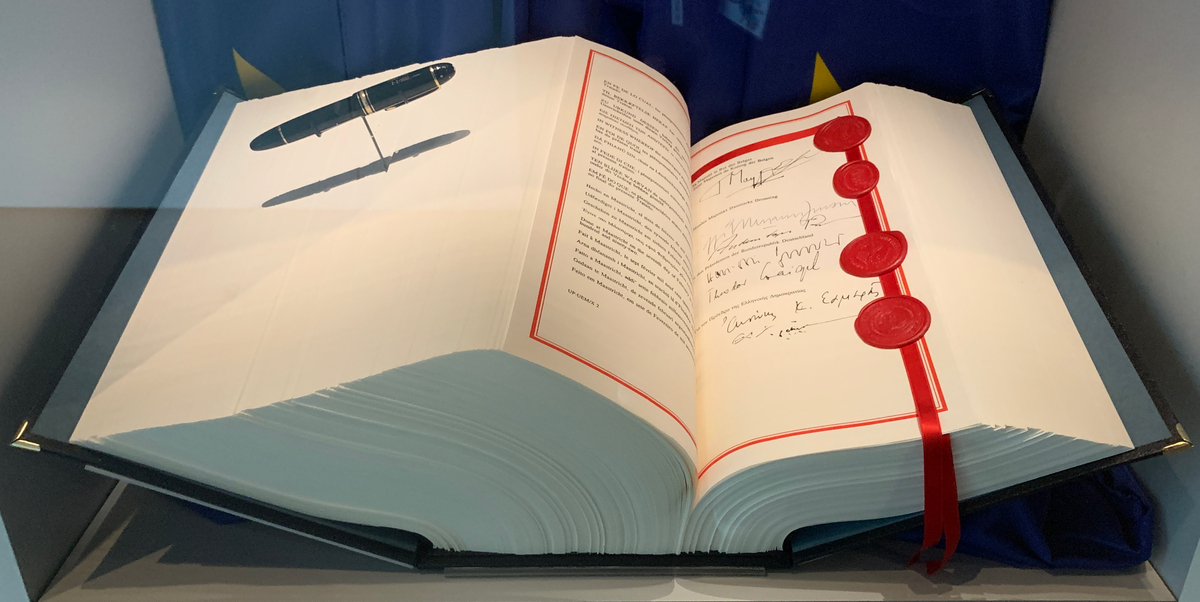
Maastricht Treaty: Establishing the European Union
Luxembourg
Political
Economic Downturn
6 min read
Updated By: History Editorial Network (HEN)
Published:
The Maastricht Treaty marked the formation of the European Union, an economic and political union involving numerous European countries. This treaty represented a significant evolution from the European Communities, originally focusing on economic cooperation, to a more comprehensive union fostering political, social, and economic integration. Luxembourg, as one of the founding members, played a crucial role in shaping the dynamics of this new arrangement.
The Maastricht Treaty introduced three pillars: the European Community pillar (encompassing economic, social, and environmental policies), the Common Foreign and Security Policy pillar, and the Police and Judicial Co-operation in Criminal Matters pillar. These pillars aimed to promote synergies and coherence among member states.
The treaty established guidelines for the future establishment of a single currency, which eventually resulted in the adoption of the euro. It also introduced the concept of European citizenship, allowing citizens to move and reside freely within the Union. Furthermore, it broadened the competencies of the Union, enhancing cooperation in areas such as education, public health, consumer protection, and infrastructure.
In financial terms, the agreement set the stage for economic convergence, requiring member states to meet specific criteria about inflation rates, public finances, interest rates, and exchange rate stability. These criteria were fundamental in paving the way for a common monetary policy led by the European Central Bank.
Luxembourg, with its strategic location and robust financial sector, benefited from the deeper integration and unified market. The treaty fortified Luxembourg's influence in European policymaking and allowed it to leverage its financial expertise within the broader Union framework.
The Maastricht Treaty also strengthened democratic engagement in European governance. The European Parliament's legislative and supervisory roles were expanded, and the decision-making process in the Council of the European Union was reformed to include more qualified majority voting, thereby enhancing the efficiency and effectiveness of Union actions.
Overall, the Maastricht Treaty laid the foundational framework for an integrated and multifaceted European Union, with Luxembourg continuing its active and pivotal participation.
#EuropeanUnion #EuropeanIntegration #Luxembourg #MaastrichtTreaty #Eurozone #EuropeanCitizenship #EconomicUnion #MoofLife
Primary Reference
History of the European Union – 1990-99 | European Union

Explore the Life Moments of
 AI Twin