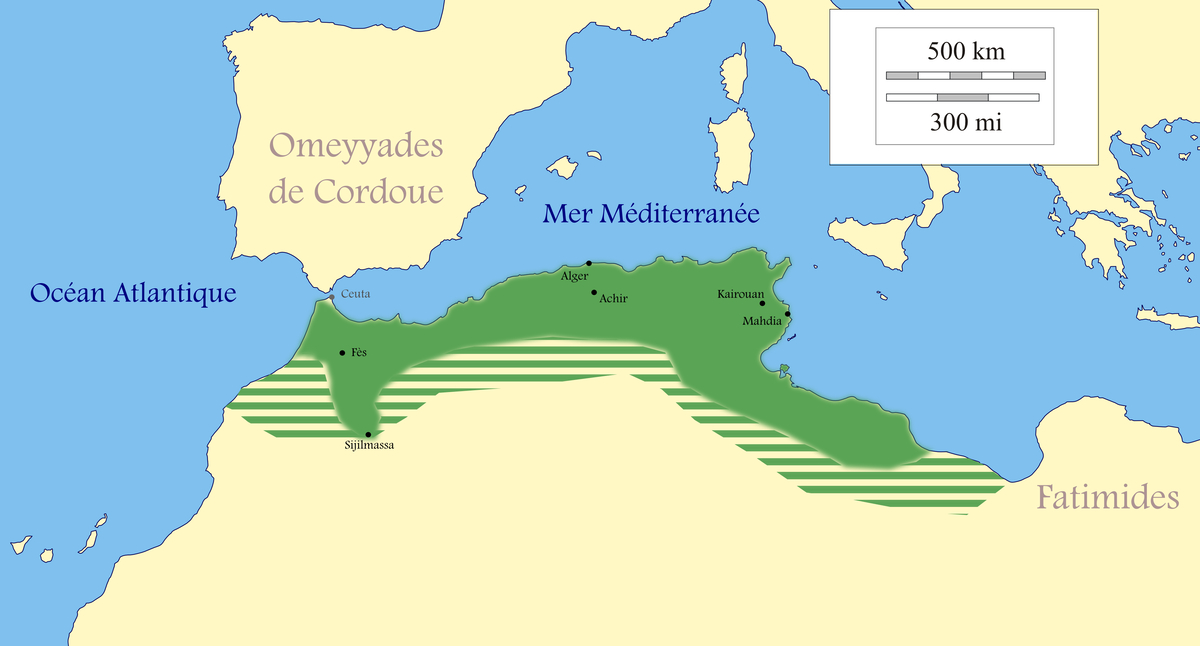
Zirid dynasty in North Africa
Libya
Political
Medieval Trade
5 min read
Updated By: History Editorial Network (HEN)
Published:
The establishment of the Zirid dynasty in North Africa marked a turning point in the region's history. Originating as vassals of the Fatimid Caliphate, the Zirids rose to power following the Fatimids' relocation of their capital to Cairo. The Zirids, acknowledging this shift, took control of the western provinces, establishing autonomy in areas that included present-day Libya, Tunisia, and parts of Algeria.
The Zirid dynasty was founded by Ziri ibn Manad, a Berber chieftain, whose descendants carried forward the legacy of leadership in the region. Under Zirid rule, the region saw significant administrative, economic, and cultural developments. They reinforced their influence by building fortified cities and enhancing existing infrastructures, enabling better control over their territory. The establishment of cities like Mahdia as the capital evidenced these administrative advancements.
Economically, the Zirids facilitated trade across the Mediterranean, benefiting from North Africa's strategic location. Libya, specifically, became a crucial part of these trade routes, connecting Africa with Europe and the Middle East. Agricultural practices improved under their rule, leveraging the fertile lands of the Maghreb region. Caravan trade, particularly involving goods like gold, salt, and slaves from sub-Saharan Africa, flourished, integrating North Africa more closely with the trans-Saharan trade networks.
Culturally, the Zirids played an instrumental role in the diffusion of Islamic learning and arts in the Maghreb. They patronized scholars, poets, and artists, bringing about a renaissance in local culture that blended Berber traditions with Islamic themes. Their court attracted intellectuals from across the Muslim world, resulting in a vibrant cultural milieu that contributed to the broader Islamic Golden Age.
However, the Zirid's tenure was not without challenges. Internal strife and external threats, especially the incursions from the Normans and the Banu Hilal tribe, posed significant hurdles. Ultimately, their influence waned, leading to the fragmentation of their territories and the rise of other regional powers.
The establishment of the Zirid dynasty laid the groundwork for future political entities in North Africa, influencing the socio-economic and cultural fabric of the region, with lasting effects resonating through Libyan history.
#ZiridDynasty #NorthAfrica #LibyanHistory #MedievalTrade #IslamicCulture #MoofLife

Explore the Life Moments of
 AI Twin