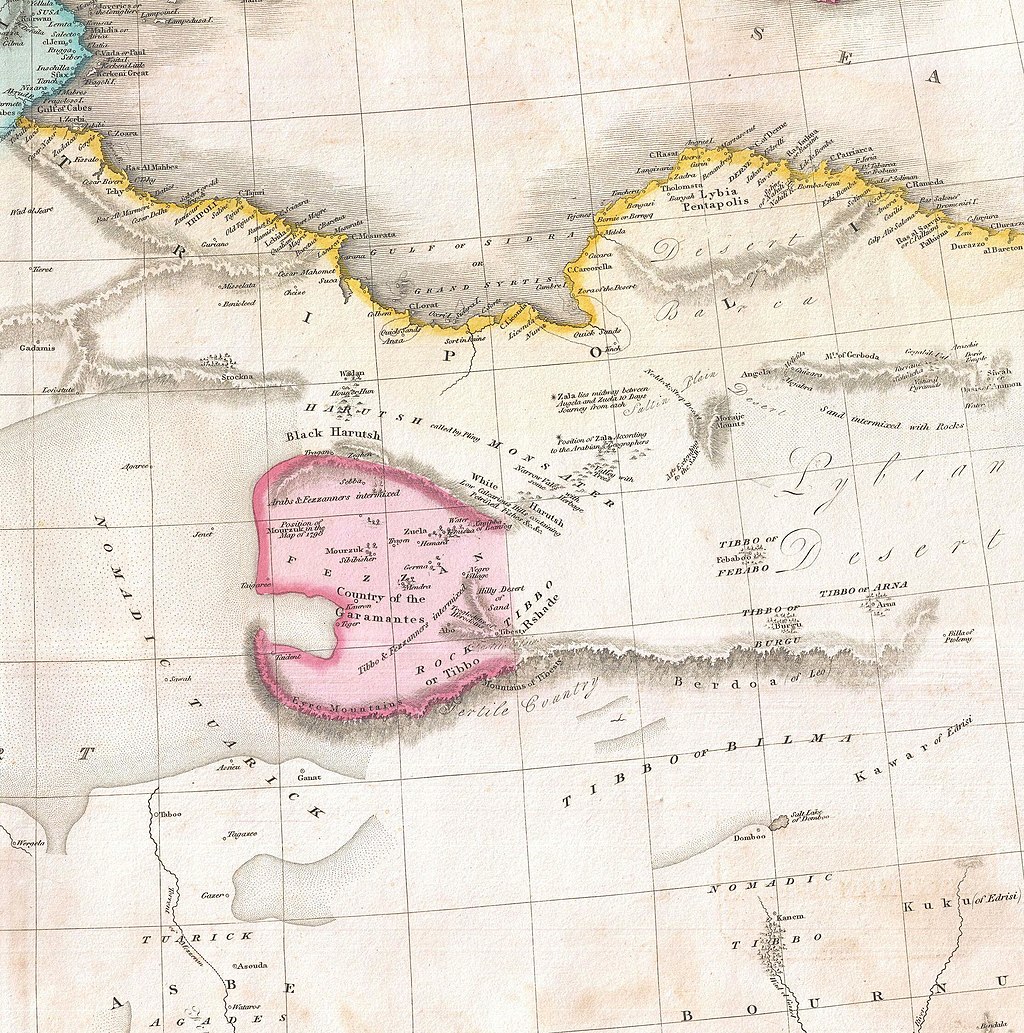
Ottomans seize power in Fezzan
Libya
Political
4 min read
Updated By: History Editorial Network (HEN)
Published:
In a critical juncture of North African history, Fezzan, an arid region in southwest Libya, came under Ottoman control. This period marked a pivotal shift in the region's political and economic landscape. Before this occurrence, the region had been under various dominions, including the Kanem-Bornu Empire and local tribes that held sway over trade routes linking sub-Saharan Africa to North Africa and the Mediterranean.
The Ottoman Empire, motivated by strategic and economic interests, viewed Fezzan as a valuable addition to its growing territories in the Maghreb. Control over Fezzan allowed the Ottomans to secure key trans-Saharan trade routes, facilitating the movement of goods such as gold, salt, and slaves, thereby enhancing their economic leverage in the region. Additionally, it provided a buffer against potential incursions by rival powers and insurgent forces.
The process of asserting control involved diplomacy with local chieftains and forceful military campaigns to integrate the region into the empire. Fezzan's incorporation helped stabilize the broader province of Tripolitania, consolidating Ottoman presence in North Africa. The region was organized under the administrative framework of the empire, improving governance structures, tax collection, and law enforcement. This facilitated greater Turkish influence in regional politics, culture, and commerce.
The long-term impacts included significant shifts in trade patterns, socio-economic changes, and the introduction of new administrative practices that influenced local governance.
#OttomanEmpire #Fezzan #Libya #NorthAfrica #TradeRoutes #TurkishInfluence #MoofLife
Primary Reference
Ottoman Maghrib, 1505–1830 | Oxford Research Encyclopedia of ...

Explore the Life Moments of
 AI Twin