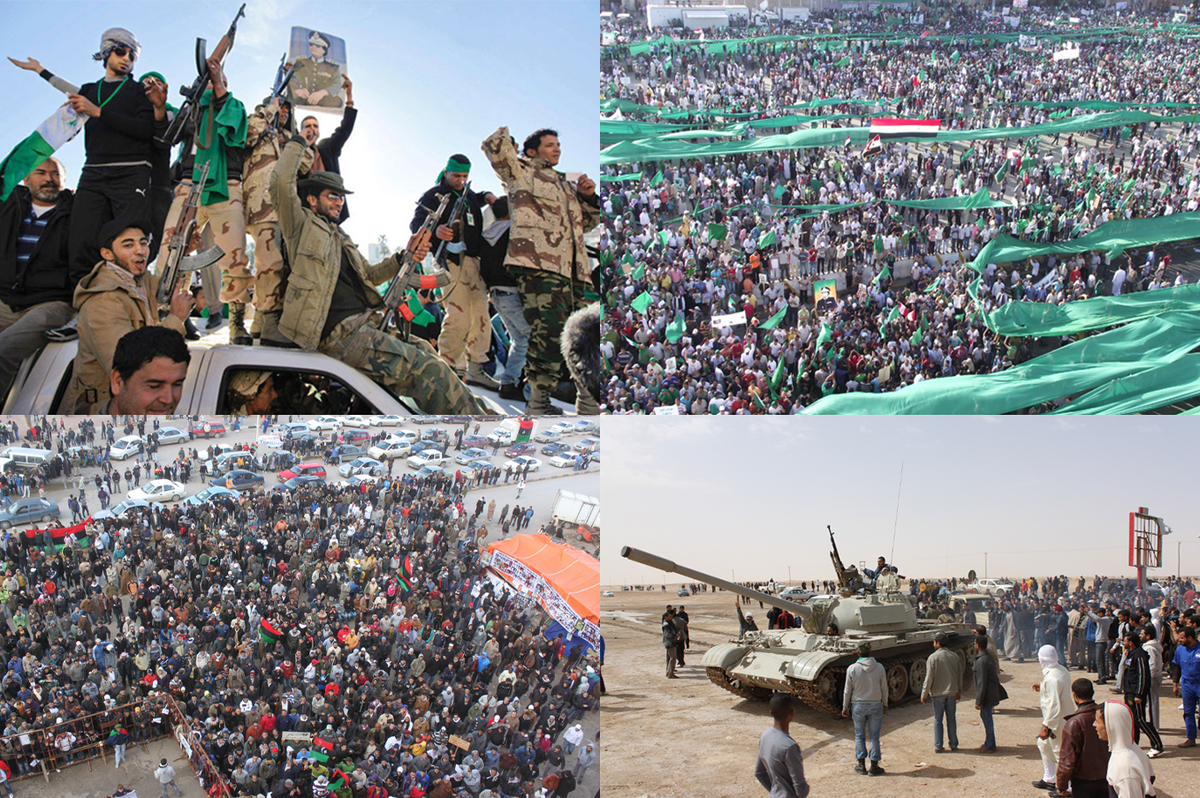
National Transitional Council declares liberation and officially ends civil war
Libya
Political
EconomicImpact
5 min read
Updated By: History Editorial Network (HEN)
Published:
Following months of intense conflict, the National Transitional Council (NTC) declared the liberation of Libya, effectively signaling the conclusion of the civil war. The declaration came after the fall of the Gaddafi regime, which had maintained an iron grip on the country for over four decades. The Libyan Civil War began with public protests against Muammar Gaddafi's rule, inspired by regional uprisings during the Arab Spring. It quickly escalated into an armed conflict between loyalist forces and rebel factions.
The proclamation of liberation took place in Benghazi, the cradle of the revolution. The NTC, which was recognized by many countries and international organizations as the legitimate authority in Libya, announced the end of hostilities and the beginning of a new era. The council urged Libyans to embrace reconciliation and work towards rebuilding the nation.
The conflict had significant human and economic costs. Estimates suggest that thousands of lives were lost in the fighting, with many more wounded and displaced. Infrastructure damage was widespread, affecting critical services such as healthcare, education, and utilities. Libyan oil production, a linchpin of the national economy, plummeted during the war, exacerbating the economic challenges facing the nascent state.
Internationally, the declaration of liberation elicited mixed reactions. While many countries and global organizations expressed support and pledged assistance, concerns remained about the power vacuum left by Gaddafi's ouster and the potential for continued instability. The proliferation of arms and militias during the conflict posed challenges for establishing centralized governance and ensuring security.
Domestically, the end of the war brought about a sense of cautious optimism. Libyans participated in democratic elections, experiencing newfound political freedoms. However, recurring internal divisions and the presence of numerous armed groups complicated efforts to achieve lasting peace and stability.
In the years following liberation, Libya faced a turbulent transition marked by political strife and sporadic violence. The path towards national unity and state-building proved arduous, reflecting the deep scars left by decades of autocratic rule and civil war.
#LibyanLiberation #EndOfCivilWar #RebuildingLibya #HumanCost #EconomicImpact #PoliticalTransition #MoofLife

Explore the Life Moments of
 AI Twin