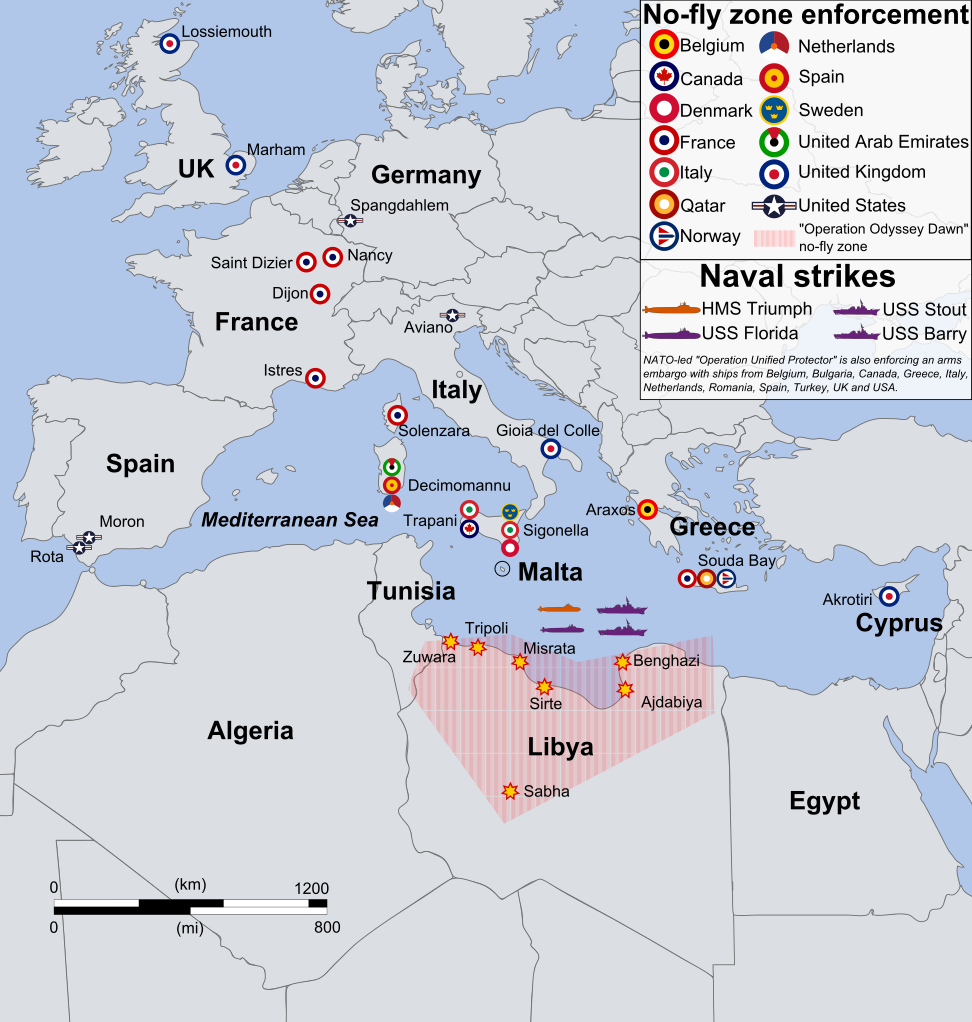
Military intervention in civil war for civilian protection and no-fly zone enforcement.
Libya
Global Politics
Conflict
6 min read
Updated By: History Editorial Network (HEN)
Published:
As the civil war in Libya intensified, the international community grew increasingly concerned over the escalating violence and humanitarian crisis. The United Nations Security Council passed Resolution 1973, authorizing member states to take all necessary measures to protect civilians under threat of attack and to enforce a no-fly zone over Libya. This resolution came after distressing reports of widespread human rights abuses and the use of heavy weaponry on civilian populations by Libyan forces.
NATO responded by launching a military intervention in Libya. The operation aimed to disable Libyan air defenses and establish a no-fly zone, thereby preventing the regime from launching aerial attacks on opposition forces and civilians. To achieve this, NATO employed a range of military assets, including surveillance aircraft, fighter jets, and warships. The coalition included countries like the United States, the United Kingdom, France, and Canada, among others.
Operation Unified Protector commenced, marking NATO's involvement in the conflict. Initial air strikes targeted radar and missile sites, command and control networks, and airfields. These efforts effectively grounded the Libyan air force and limited the regime's ability to mobilize troops and resources. Throughout the operation, NATO conducted thousands of sorties, with a significant number focused on strike missions aimed at degrading the regime’s military infrastructure.
NATO's intervention had substantial implications for the conflict. By neutralizing the air threat, it reduced the potential for large-scale massacres and provided strategic support to opposition groups. The intervention also sent a clear message about the international community's stance on human rights and the protection of civilians, reinforcing the principles outlined in the Responsibility to Protect (R2P) doctrine.
However, the intervention's long-term impact on Libya was complex. While it played a pivotal role in toppling the regime, it also contributed to the power vacuum that later led to extended instability and conflict within the country. Despite the immediate humanitarian relief, the lack of post-intervention planning has been criticized in fostering enduring instability.
In conclusion, NATO's military intervention in Libya was a critical episode in modern conflict, underscoring the challenges and consequences of international military engagement in civil crises.
#Libya #NATO #MilitaryIntervention #CivilWar #HumanitarianCrisis #NoFlyZone #GlobalPolitics #Conflict #ResponsibilityToProtect #MoofLife

Explore the Life Moments of
 AI Twin