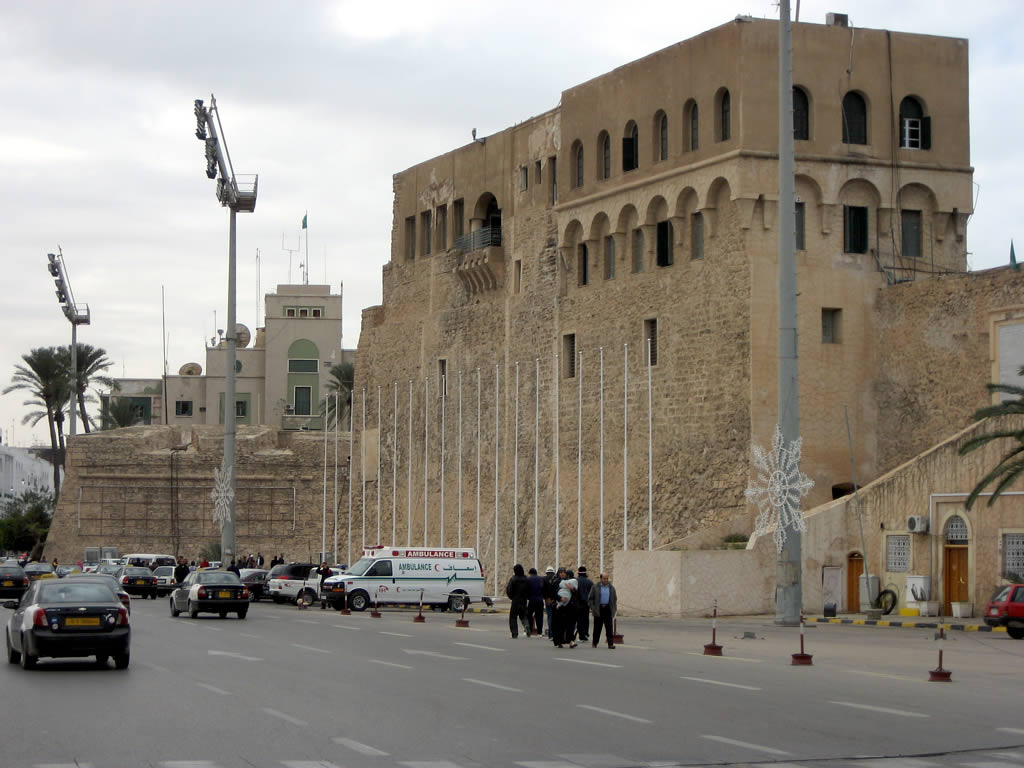
History of Red Castle in Tripoli
Libya
CulturalHeritage
5 min read
Updated By: History Editorial Network (HEN)
Published:
The construction of the Red Castle in Tripoli was a pivotal moment in Libyan history. Built under the direction of the Knights of St. John following their control of the region, the Red Castle, also known as Assaraya al-Hamra, became a dominant fortress in Tripoli. The Knights acquired Tripoli as part of a strategic agreement which sought to establish the city as a defensive and administrative hub.
The Red Castle's construction was initiated to secure and fortify the coastal city, aiming to ward off potential invasions and pirates. Strategically located overlooking the Mediterranean Sea, the fortress provided a crucial vantage point, protecting the port and the surrounding area. The castle's structure incorporated advanced military architecture of the time, including thick walls, bastions, and a moat, embedding a sophisticated defensive capability within its design.
The establishment of the Red Castle had considerable impacts on Tripoli and its surroundings. It transformed the city into a focal point of military, administrative, and economic activities. Tripoli's fortified position under the Knights' rule attracted traders, artisans, and settlers, boosting the local economy and contributing to urban development.
Moreover, the Red Castle served as an administrative center, where the Knights governed and strategized their regional control. This period marked an amalgamation of various cultural influences, as the fortress facilitated interactions between different peoples and traditions across the Mediterranean.
The dimensions and construction capabilities of the Red Castle reflected its importance. Standing at an imposing height, the castle covered an extensive area, and records suggest that its walls were robust enough to repel the artillery of that era. The cost and resources invested in its construction were substantial, signifying the value the Knights placed on this strategic stronghold.
The legacy of the Red Castle continued as subsequent rulers, including the Ottomans, modified and expanded the fortress, further embedding it into the historical and cultural fabric of Tripoli. Today, the Red Castle remains a prominent historical site, symbolizing the rich and complex history of Libya's capital.
#MoofLife #LibyaHistory #TripoliFortress #RedCastle #CulturalHeritage #HistoricalEvent
Primary Reference
Citadel of Tripoli - Wikipedia

Explore the Life Moments of
 AI Twin