Gaddafi seizes power in coup
Libya
Political
Global Trade
6 min read
Updated By: History Editorial Network (HEN)
Published:
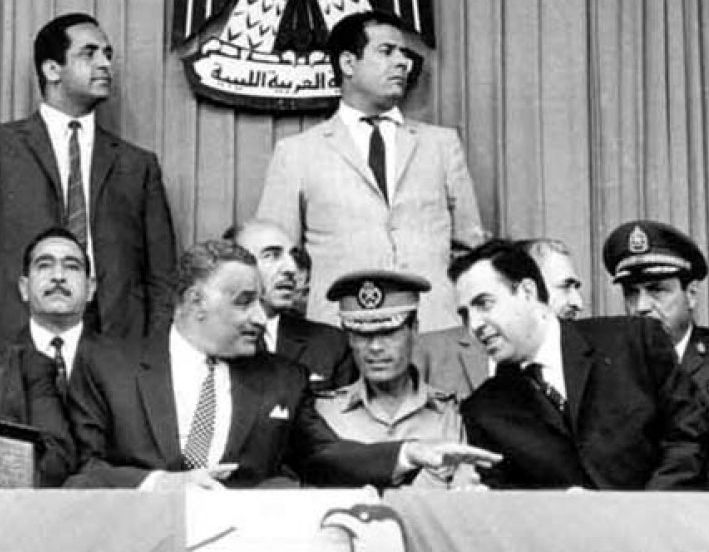
Muammar Gaddafi, a young Libyan army officer, emerged as the leader of a bloodless military coup d'état in Libya. Before this, Libya was under the rule of King Idris I, who oversaw a monarchy that many perceived as corrupt and inefficient. The country's significant oil wealth did not translate into widespread prosperity, with much of the population living in poverty. Dissatisfaction with the monarchy grew amid increasing awareness of social inequality and calls for modernization.
Gaddafi's rise was emblematic of broader regional movements advocating Arab nationalism and anti-imperialism. Influenced by the ideologies of Egyptian President Gamal Abdel Nasser, Gaddafi and a group of fellow officers, later known as the Free Officers Movement, orchestrated the coup while King Idris I was out of the country for medical treatment. The takeover happened swiftly with minimal resistance, signaling a seamless transfer of power.
Once in control, Gaddafi proclaimed the establishment of the Libyan Arab Republic, abolishing the monarchy and its institutions. The new regime promised to modernize Libya's economy and social structure, leveraging its oil revenue to fund social programs, infrastructure projects, and public services. Gaddafi's policies were rooted in his ideological framework, which combined elements of socialism, pan-Arabism, and a uniquely Libyan interpretation of Islamic governance.
The coup had significant implications domestically and internationally. Gaddafi's government nationalized foreign oil companies, increasing state revenues and asserting economic independence from Western powers. These actions resonated within the broader context of post-colonial North Africa, where countries were redefining their positions in the global landscape.
Moreover, Gaddafi's regime engaged in various geopolitical activities, including support for revolutionary movements in other countries and a contentious relationship with Western nations. His ambitious foreign policy often positioned Libya at odds with global powers, leading to periods of isolation and conflict.
In conclusion, Muammar Gaddafi's assumption of power marked a transformative period in Libyan history, characterized by a shift from monarchy to a revolutionary republic, ambitious social and economic reforms, and an assertive foreign policy. The impact of this event reverberated through Libya and beyond, shaping the nation's trajectory for decades.
#Libya #Gaddafi #Coup #ArabNationalism #OilEconomy #MoofLife

Explore the Life Moments of
 AI Twin