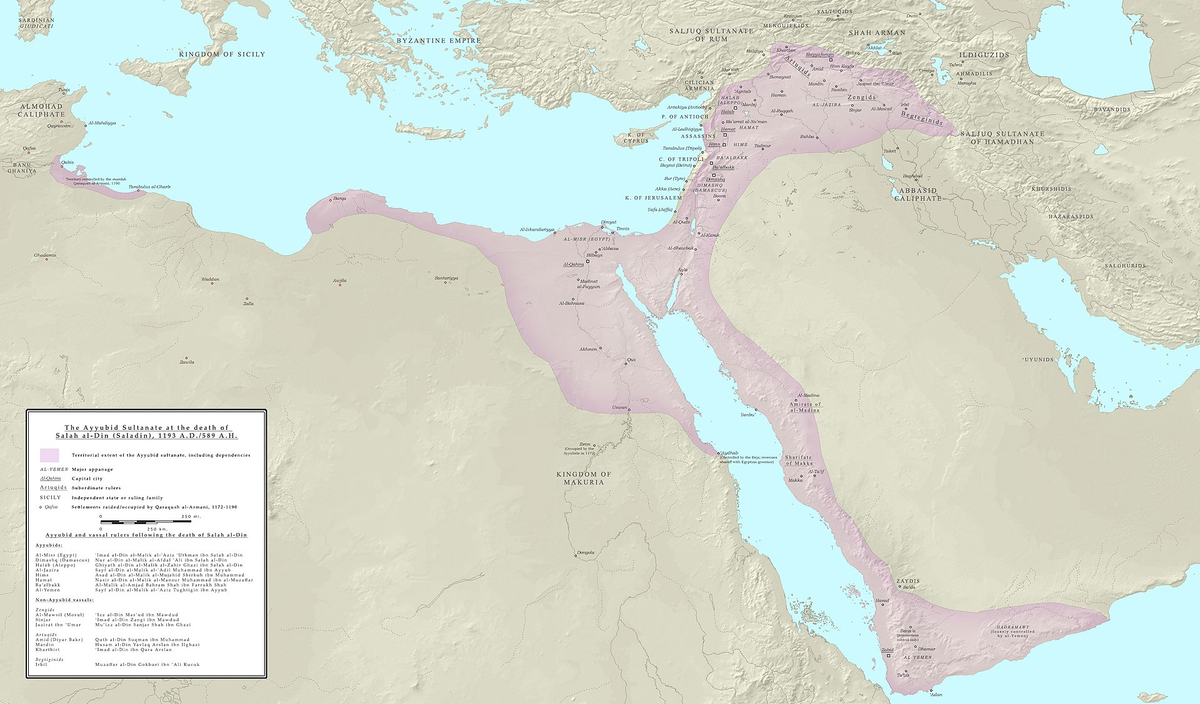
Ayyubid Rule Begins: Region Reconquered from Normans
Libya
Trade
5 min read
Updated By: History Editorial Network (HEN)
Published:
Following a series of campaigns, the Ayyubid dynasty reconquered the Libyan region from the Normans. The reconquest marked a pivotal shift in power dynamics in the area. The Ayyubids, originating from the Kurdish dynasty founded by Saladin, focused on consolidating their rule across North Africa. This transition was part of a broader Ayyubid strategy to reclaim territories previously held by Normans, who had established control over parts of the Mediterranean.
The Ayyubid administration swiftly implemented its governance system, aimed at stabilizing and integrating Libya into the larger Ayyubid territory. In doing so, they restructured local governance, emphasizing stricter administrative control and reinforcing Islamic practices. This contrasted the Norman influence, which had introduced European feudal practices and Christianity to some segments of the Libyan population.
A notable impact of the Ayyubid reconquest was the revitalization of trade routes. With Libya under Ayyubid control, trade across the Sahara and into the Mediterranean received a significant boost. This re-establishment of trade connections led to economic growth and increased cultural exchanges within the region. Cities such as Tripoli benefitted from increased commerce, becoming vibrant centers of exchange and interaction.
Further, the Ayyubids undertook various infrastructure projects, including the construction of mosques, fortifications, and caravansaries. These efforts not only facilitated the safer movement of goods and people but also helped in spreading Islamic culture and educational practices. Scholars and students traveled widely within the empire, contributing to a more interconnected intellectual environment.
Military efforts were also reorganized to protect the newly acquired territory from potential external threats, including Crusader forces. The integration of Libya into the Ayyubid strategic defense network significantly enhanced the dynasty's overall territorial security.
From a demographic perspective, the influx of people, including merchants, scholars, and settlers from other parts of the Ayyubid empire, diversified the local population. This diversification had lasting effects on the cultural and social fabric of Libyan society.
#AyyubidRule #LibyanHistory #MedievalNorthAfrica #TradeRoutes #CulturalExchange #IslamicGovernance #MoofLife
Primary Reference
Almohad Caliphate - Wikipedia

Explore the Life Moments of
 AI Twin