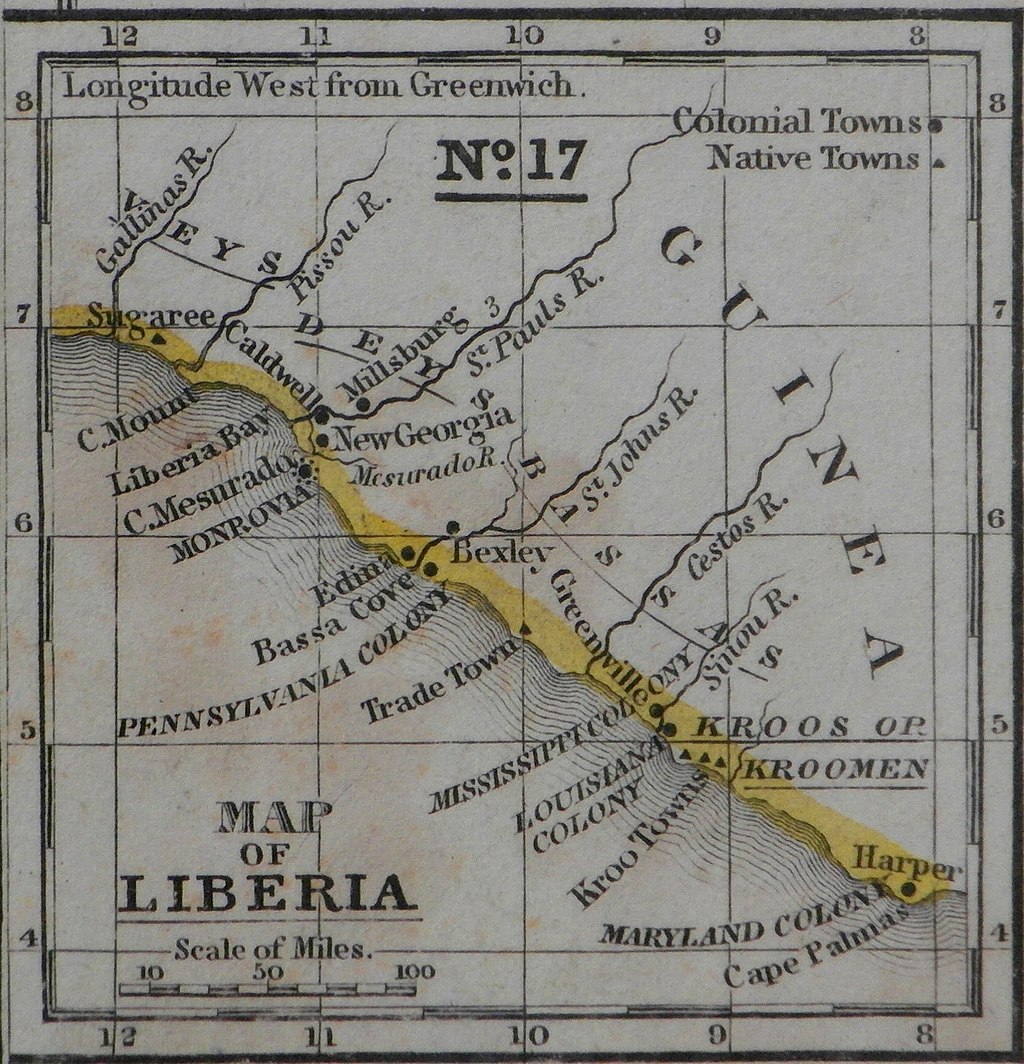
Formation of the Commonwealth of Liberia by Settlements in 1838 and Its Impact on Monrovia
Liberia
Politics
Geography
3 min read
Updated By: History Editorial Network (HEN)
Published:
Updated:
In 1838, the Commonwealth of Liberia was officially established, marking a significant milestone in the history of African colonization. This political entity emerged from various settlements founded by the American Colonization Society (ACS) and other colonization groups. The capital city, Monrovia, was named in honor of U.S. President James Monroe, who was a strong supporter of the colonization movement. The formation of Liberia represented a unification of these settlements, primarily inhabited by colonists of African-American descent, known as Americo-Liberians. These individuals, many of whom had mixed European ancestry, played a crucial role in shaping the political, social, and cultural landscape of Liberia. Despite their African roots, Americo-Liberians maintained distinct cultural practices influenced by their American heritage, particularly in education and religion. However, their arrival and subsequent governance often led to tensions with the indigenous populations, as the Americo-Liberians viewed themselves as superior. This complex relationship between the Americo-Liberians and the native tribes would have lasting implications for Liberia's development and social dynamics in the years to come.
#mooflife
#MomentOfLife
#Liberia
#Americo-liberians
#AmericanColonizationSociety
#Monrovia
#AfricanHistory

Explore the Life Moments of
 AI Twin