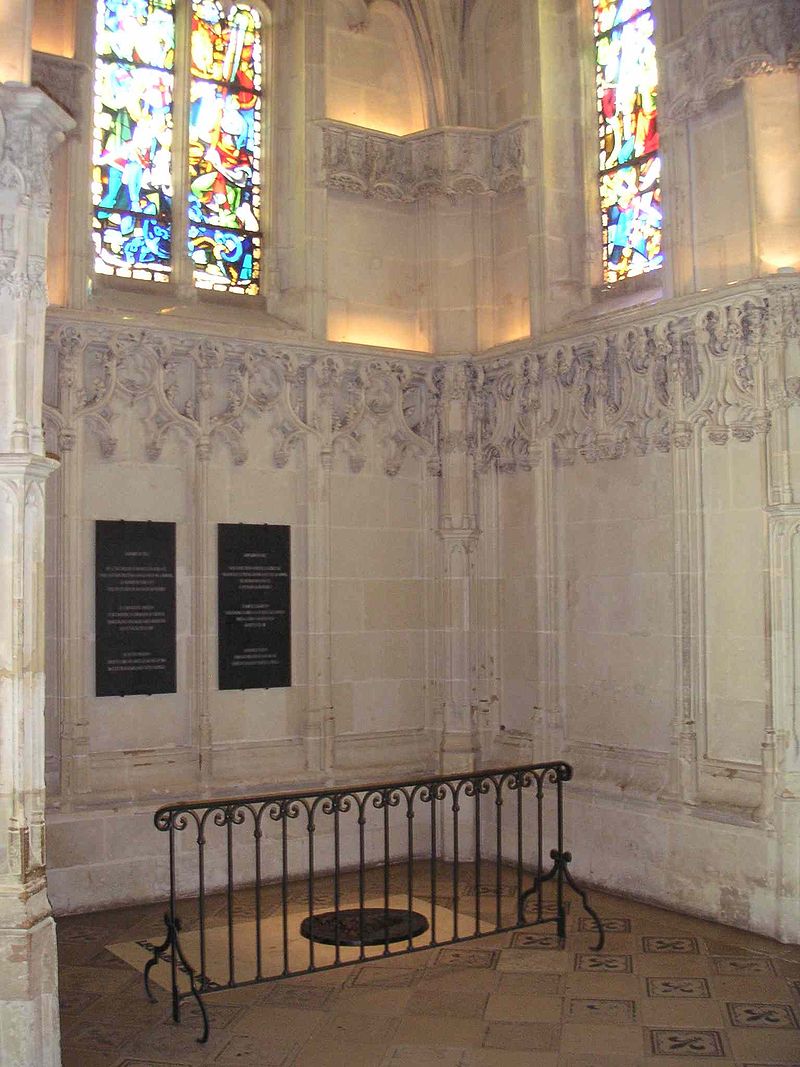
Re-interment of Leonardo da Vinci at Château d'Amboise: Honoring a Renaissance polymath's legacy.
Italy
Science Preservation
4 min read
Updated By: History Editorial Network (HEN)
Published:
Updated:
The re-interment of the presumed remains of Leonardo da Vinci in the Chapel of Saint Hubert at Château d'Amboise marked a significant milestone in the ongoing reverence for the renowned polymath. Leonardo da Vinci, whose contributions spanned art, science, and engineering, had originally passed away in the French town of Amboise, where he spent the final years of his life under the patronage of King Francis I.
Over the centuries, the exact location of Leonardo's remains faced uncertainty due to the tumultuous history and numerous reconstructions of the chapel. During the specified event, the remains presumed to belong to Leonardo were carefully re-examined and transferred back to a place of honor in the Chapel of Saint Hubert. This effort was part of broader historical preservation activities that sought to honor the legacies of influential figures by ensuring their final resting places were respected and maintained.
The re-interment at Château d'Amboise drew attention from historians, scholars, and dignitaries who recognized Leonardo's indelible impact on multiple disciplines. His works, including famous paintings like the 'Mona Lisa' and 'The Last Supper', as well as his extraordinary notebooks filled with scientific studies, anatomical sketches, and innovative designs, continued to inspire generations.
The re-interment was not merely an act of relocation, but a symbolic gesture that emphasized the enduring significance of preserving historical legacies. By ensuring Leonardo's presumed remains were respectfully reburied in a dedicated space, it underscored the importance of historical documentation and continuity in celebrating human achievement.
#MoofLife #LeonardoDaVinci #ChâteauDAmboise #HistoricalReverence #CulturalHeritage #ScientificLegacy
Explore the Life Moments of
 AI Twin