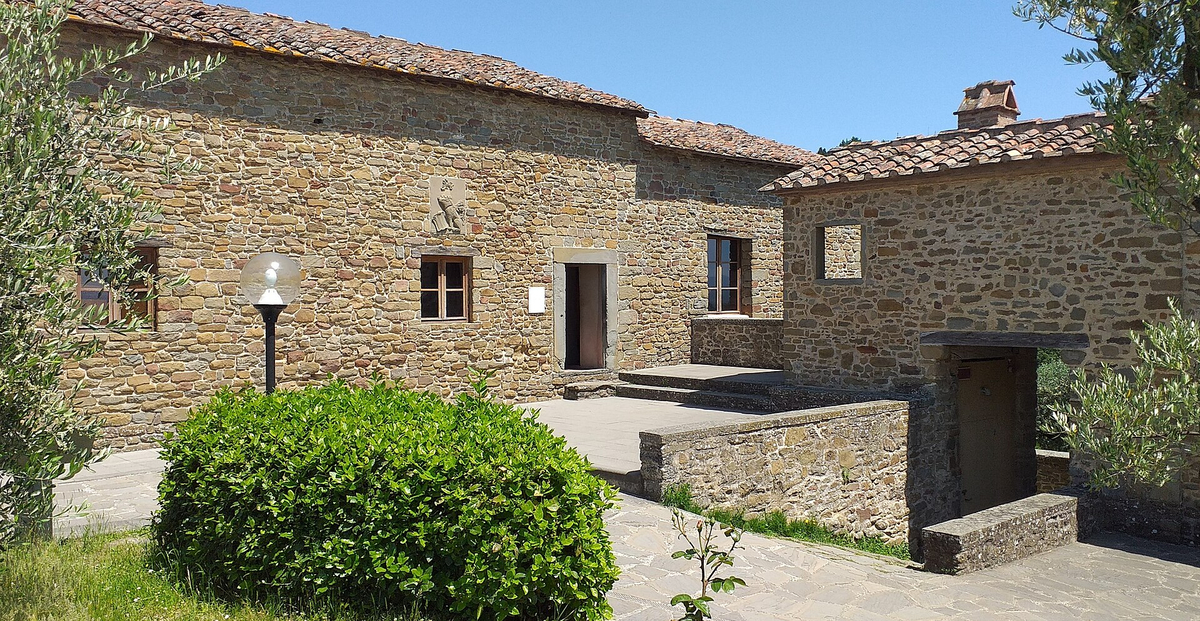
Leonardo da Vinci: Renaissance genius born in Vinci, Tuscany.
Italy

Art
Science
6 min read
Updated By: History Editorial Network (HEN)
Published:
Updated:
Leonardo da Vinci, born on April 15, 1452, in the small town of Vinci, nestled in the rolling hills of Tuscany, Italy, stands as one of the most dazzling figures of the Renaissance—a true embodiment of the era’s thirst for knowledge, beauty, and innovation. A polymath in the truest sense, Leonardo’s curiosity was boundless, crossing the traditional borders between art, science, engineering, anatomy, and nature.
Raised as the illegitimate son of Ser Piero, a notary, and a peasant woman named Caterina, Leonardo grew up exploring the landscapes around Vinci. His early fascination with nature—how birds flew, how water flowed, how muscles moved—would shape nearly every pursuit of his life. At around age 14, he was apprenticed in Florence to Andrea del Verrocchio, a master artist whose workshop exposed Leonardo to painting, sculpture, metalwork, and more.
By his twenties, Leonardo was already showing signs of brilliance. His first known independent work, The Annunciation, revealed not just technical skill but a delicate observation of human form and light. But it was more than artistic talent that set him apart—it was his relentless curiosity and revolutionary approach. He filled notebooks with mirrored script and sketches—detailed studies of human anatomy, fantastical machines, botanical observations, and flight diagrams. Though many of his designs were never built in his lifetime, they foreshadowed helicopters, tanks, and modern hydraulic engineering.
Perhaps his most famous works, The Last Supper (1490s) and the Mona Lisa (c. 1503–1506), embody this fusion of art and inquiry. The Last Supper captures a dramatic moment with psychological intensity and spatial experimentation. The Mona Lisa, with her enigmatic smile and haunting gaze, has fascinated viewers for centuries—her expression the product of Leonardo’s deep study of human emotion and anatomy.
Leonardo’s notebooks reveal a mind decades—if not centuries—ahead of his time. His anatomical drawings, based on dissections, are so precise they still astonish modern scientists. His thoughts on geology, astronomy, and hydrodynamics were similarly prescient. But Leonardo wasn’t just a thinker—he was also a tireless doer, though many of his projects went unfinished, partly due to his insatiable desire to move on to the next big idea.
Despite his profound influence, Leonardo published very little in his lifetime. Much of what we know comes from the thousands of pages of his personal notes and sketches that survived. He died on May 2, 1519, in Amboise, France, at the court of King Francis I, who admired him deeply.
Leonardo da Vinci remains a towering symbol of the Renaissance spirit: a belief in the power of human potential, the unity of art and science, and the importance of observation and imagination. From a small village in Tuscany, he reached toward the infinite.
#LeonardoDaVinci #RenaissanceGenius #MomentsOfLife #MoofLife_Moment #MoofLife
Primary Reference
Leonardo da Vinci
Explore the Life Moments of
 AI Twin