Leonardo da Vinci's Pioneering Flying Machine: Detailed Study of Avian Flight and Aerodynamics.
Italy
Science
4 min read
Updated By: History Editorial Network (HEN)
Published:
Updated:
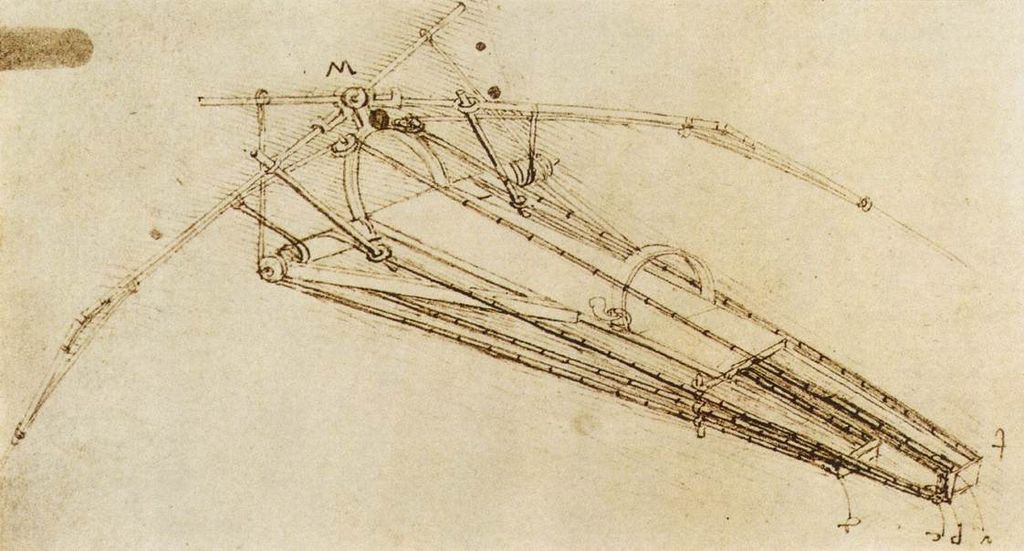
Leonardo da Vinci's investigation into flight was solidified with the presentation of his flying machine in the "Codex on the Flight of Birds." The Codex, a compilation of observations and sketches, detailed Da Vinci's deep study of avian flight mechanics and aerodynamics. He meticulously recorded the wing shapes, muscle movements, and behavior of various bird species, seeking to understand the principles that enabled flight.
Leonardo’s flying machine was an ornithopter, a device intended to fly by flapping wings, mimicking the action of birds. His designs included a detailed harness for the pilot, who would lie face down and manually operate a complex system of pulleys and levers attached to large wings. These wings, constructed to emulate bird wings' jointed structure, displayed Leonardo’s effort to replicate natural flight intricately.
While Leonardo’s flying machine was never constructed or tested during his lifetime, his designs underscored a profound leap in the conceptual understanding of human flight. His work anticipated modern aerodynamics and contributed significantly to the field of aviation centuries later. The meticulous nature of the Codex, with its precise drawings and notes, provided a foundation for future inventors and scientists like the Wright brothers, who successfully achieved powered flight.
Leonardo's interdisciplinary approach, combining art, science, and engineering, showcased his innovative thinking and profound curiosity about the natural world. Although the flying machine did not take to the skies, it remains a landmark in the history of human aviation, reflecting a visionary attempt to transcend beyond the limitations of contemporary technology.
#LeonardoDaVinci #AviationHistory #Flight #Innovation #CodexOnTheFlightOfBirds #MoofLife
Explore the Life Moments of
 AI Twin