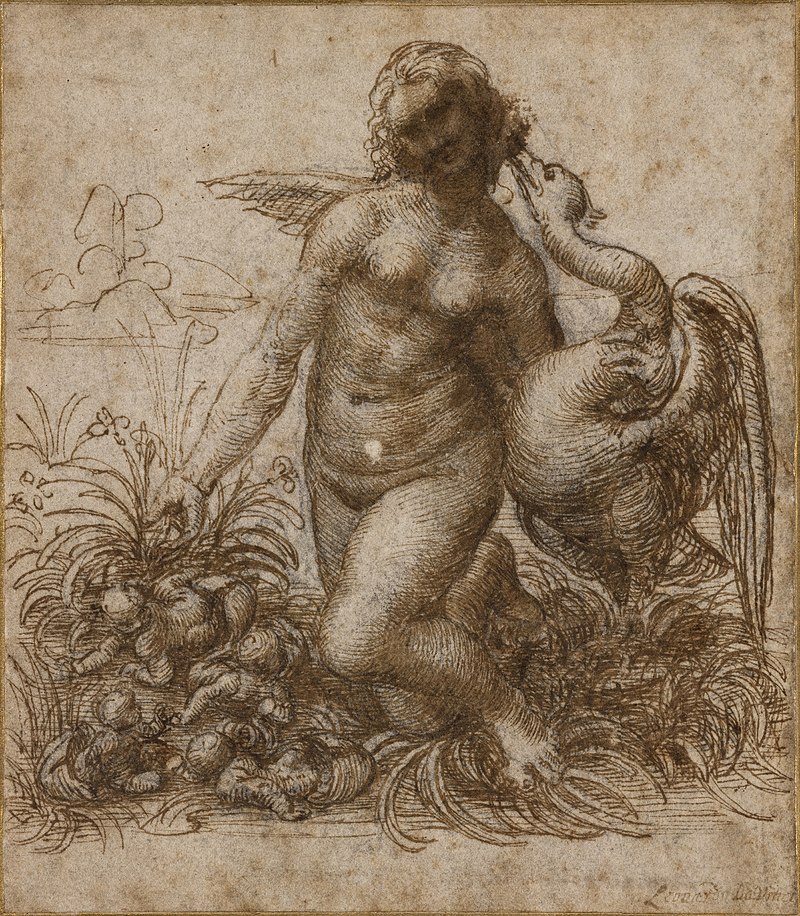
Leonardo da Vinci's Masterful Studies: "La Scapigliata" and "Study for Leda and the Swan".
Italy
Art
Renaissance
3 min read
Updated By: History Editorial Network (HEN)
Published:
Updated:
Leonardo da Vinci, during the early 16th century, worked on two notable pieces: "La Scapigliata" and "Study for Leda and the Swan". These works highlight his mastery in portraying human form and emotion. "La Scapigliata," or "The Disheveled Head," showcases Leonardo's ability to convey softness and texture through unfinished sketches. The artwork presents a young woman's head, slightly turned, with flowing hair, capturing a sense of life and spontaneity. This sketch is often noted for its loose, yet precise, brushwork.
In parallel, Leonardo created the "Study for Leda and the Swan". This piece draws on the mythological story of Leda, who was impregnated by Zeus in the form of a swan. Leonardo's study delves into human anatomy and movement, focusing on dynamic poses and the intricate interplay of human and avian forms. These sketches contributed to his exploration of mythological subjects and the natural world.
Leonardo's work during this period underlines his commitment to rigorous observation and innovative techniques. His emphasis on anatomical precision and fluidity of forms influenced subsequent artists and became a hallmark of Renaissance artistry. These studies, though unfinished, reveal the depth of his creative process and his impact on both contemporary and future art.
#LeonardoDaVinci #RenaissanceArt #HumanForm #AnatomyInArt #MythologyInArt #MoofLife
Explore the Life Moments of
 AI Twin