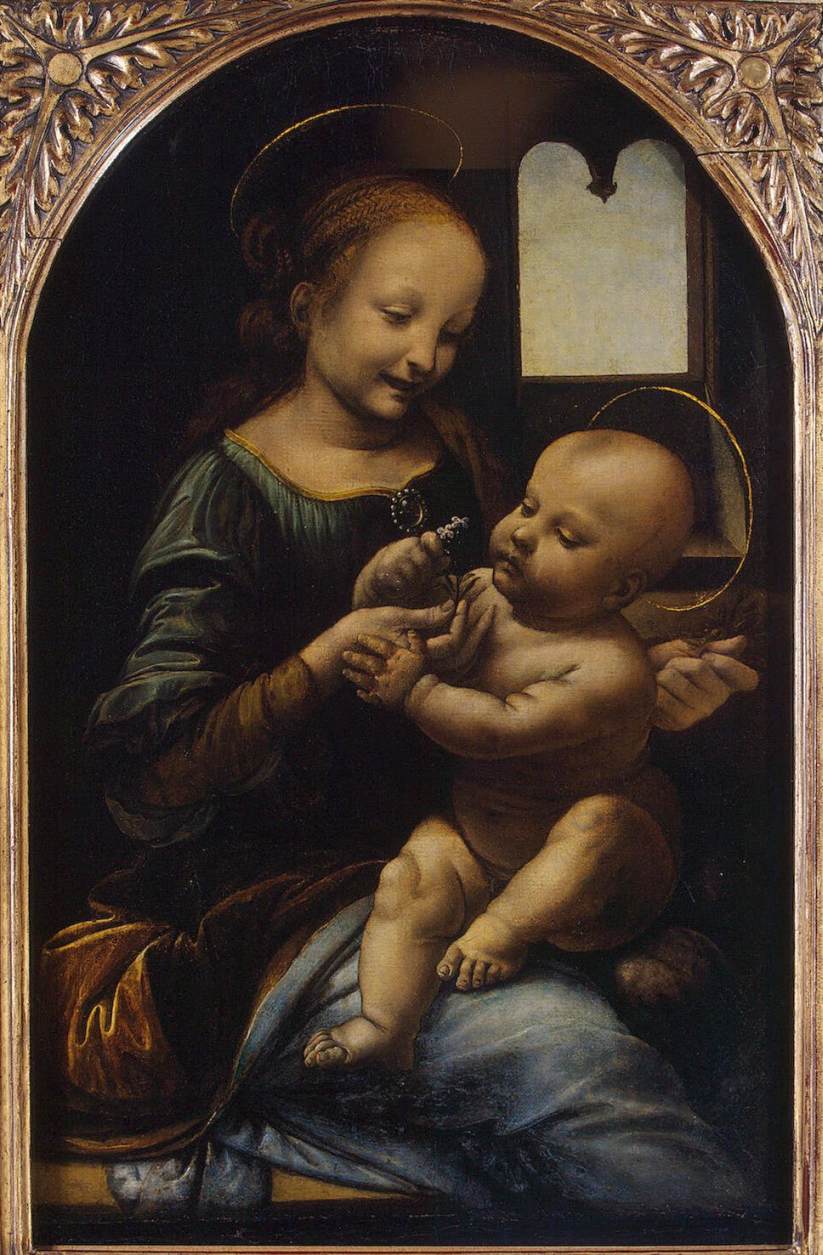
Leonardo da Vinci's Benois Madonna: A Renaissance masterpiece of innovation and emotion.
Italy
Art
4 min read
Updated By: History Editorial Network (HEN)
Published:
Updated:
Leonardo da Vinci, a polymath of the Italian Renaissance, undertook the creation of the Benois Madonna during a span dominated by exploration in various disciplines. This painting, also known as the Madonna and Child with Flowers, is now housed in the Hermitage Museum in Saint Petersburg. At the time, Leonardo was emerging as a prominent figure in the art world with innovative approaches and techniques that would later solidify his legacy.
The Benois Madonna exemplifies Leonardo's mastery of chiaroscuro and his evolving interest in human emotion and anatomy. His depiction of the Virgin Mary and the infant Jesus showcased a tender and intimate moment, capturing a naturalistic and detailed portrayal that differed from the more formal representations common in earlier religious art. This piece contributed to the shift towards a more human-centered and realistic approach to painting during the Renaissance.
Leonardo's work on the Benois Madonna reflects his broader exploration of light, shadow, and three-dimensional space on a two-dimensional plane. The techniques he used would influence not only his contemporaries but also numerous future generations of artists. The impact of this painting is seen in the way it helped move Renaissance art towards greater realism and emotional depth.
The painting's presence in the Hermitage Museum today highlights its enduring cultural and historical significance. It attracts scholars, art enthusiasts, and visitors worldwide, reflecting the global recognition of Leonardo's contributions to art and science. The Benois Madonna continues to be a subject of study and admiration, maintaining its relevance centuries after its completion.
#LeonardoDaVinci #RenaissanceArt #BenoisMadonna #HermitageMuseum #ArtHistory #MoofLife
Explore the Life Moments of
 AI Twin