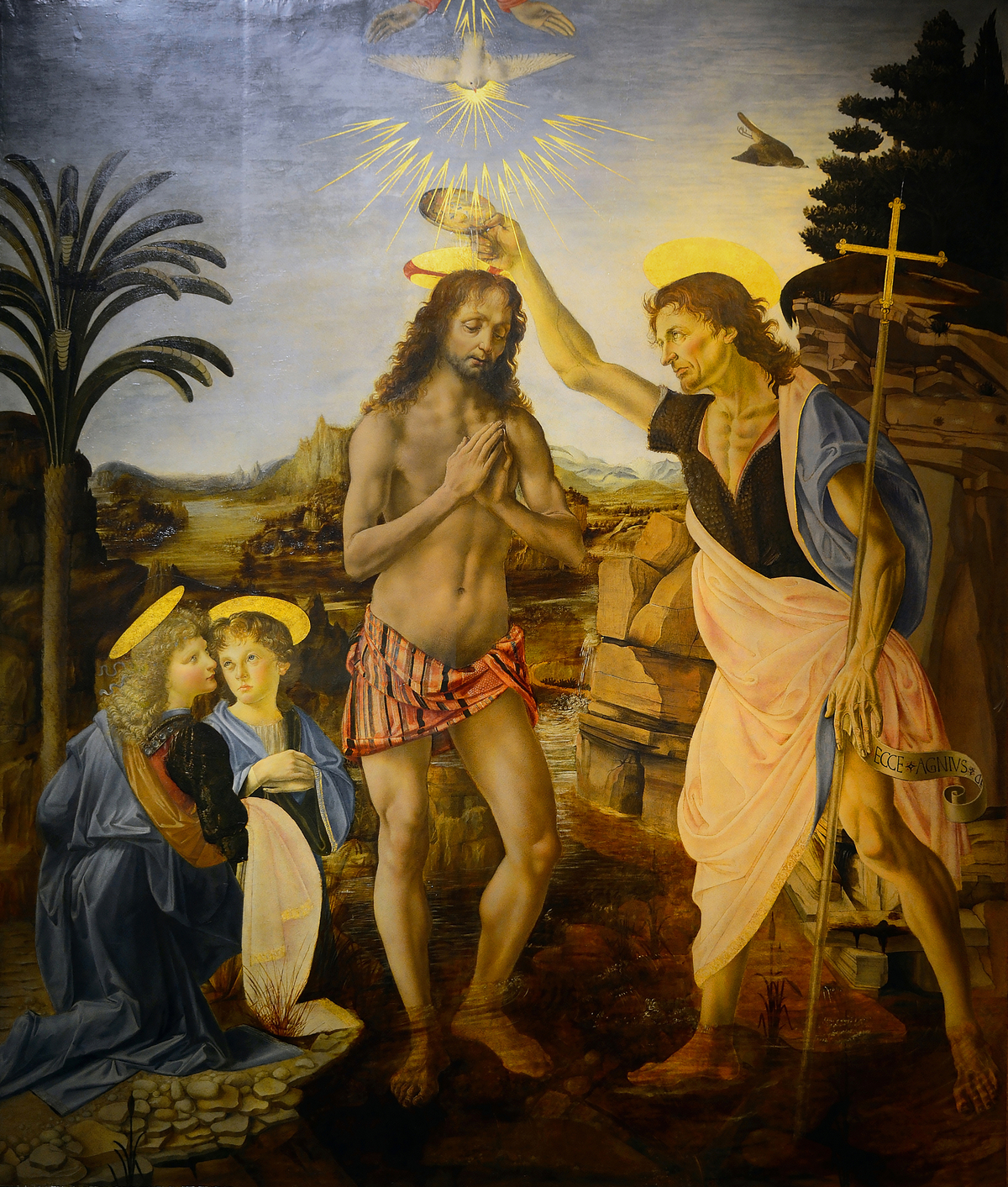
Leonardo da Vinci's Angel: Early Influence on Renaissance Art
Italy
Art Renaissance Art
3 min read
Updated By: History Editorial Network (HEN)
Published:
In the late 15th century, Leonardo da Vinci, an apprentice in Andrea del Verrocchio's workshop, contributed to the painting "The Baptism of Christ." Under the supervision of Verrocchio, a prominent artist in Florence, Leonardo was assigned the task of painting an angel and parts of the background. Verrocchio's workshop was known for producing works that combined traditional techniques with innovative approaches, a characteristic that Leonardo would later adopt in his career.
Leonardo's work on this painting is noted for its fine detail and innovative use of light and shadow. The angel attributed to Leonardo is distinguished by its softer, more realistic features compared to the other figures in the painting. This early contribution is significant as it highlights Leonardo's developing skills and artistic style, which would become more pronounced in his later works.
The impact of this contribution lies in its influence on the direction of Renaissance art. Leonardo's work exemplifies a shift towards greater naturalism and attention to detail. This moment also marks an important step in Leonardo's artistic development, showcasing his potential and hinting at the genius he would become.
This collaboration is often cited as a turning point for Leonardo, where he began to emerge as a master in his own right, influencing his peers and future generations of artists.
#LeonardoDaVinci #RenaissanceArt #Verrocchio #ArtHistory #Apprenticeship #MoofLife
Explore the Life Moments of
 AI Twin