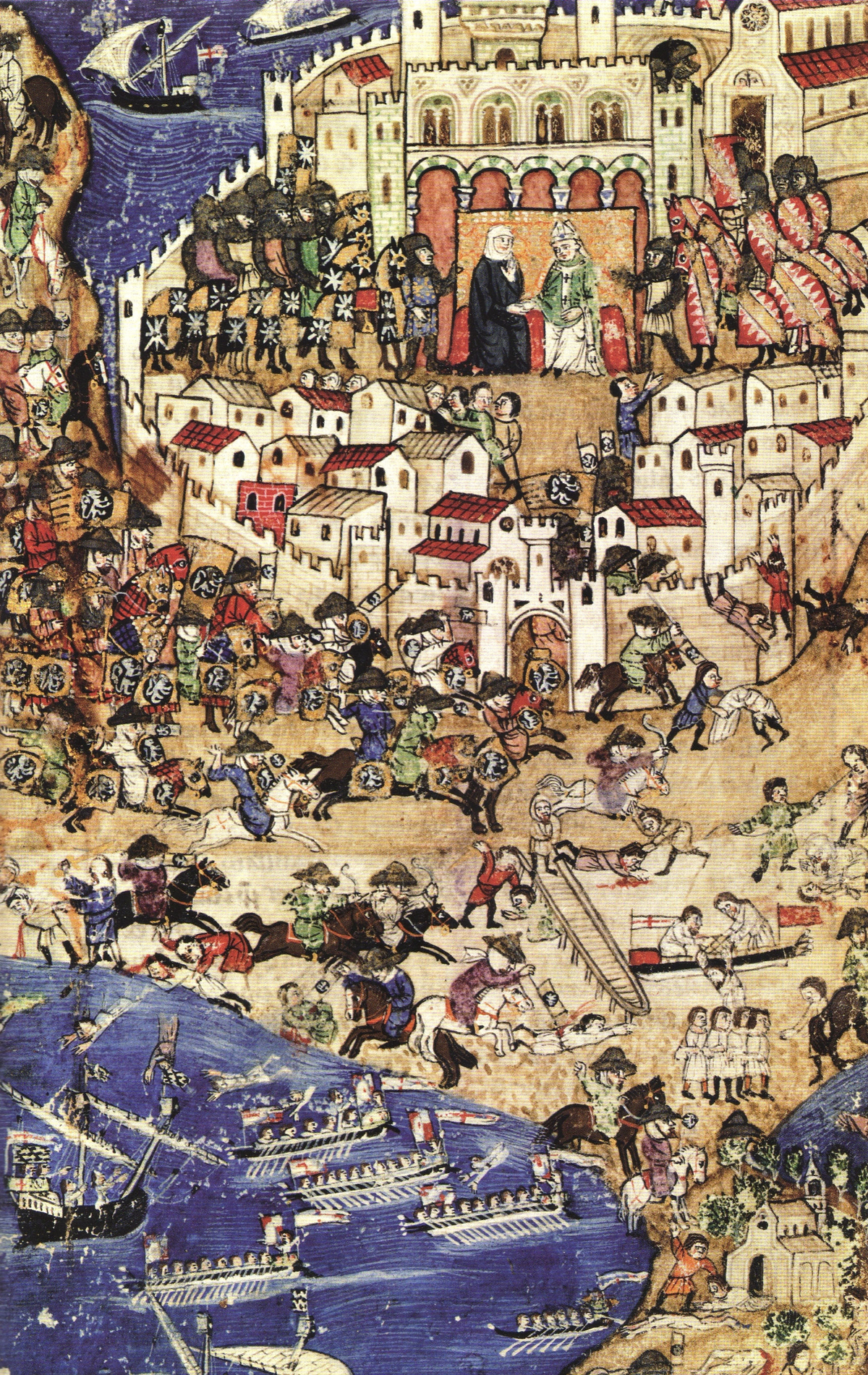
Mamluk Sultan Al-Nasir Muhammad sieges and captures Tripoli from the Crusaders
Lebanon

5 min read
Updated By: History Editorial Network (HEN)
Published:
During a pivotal instance in Middle Eastern history, Mamluk Sultan Al-Nasir Muhammad launched a siege on the coastal city of Tripoli, held by Crusader forces. The Crusaders, established in the Levant for nearly two centuries, faced a formidable adversary as the Mamluks sought to expand their influence and eliminate the remaining Crusader states.
The build-up to this siege had long been in motion. The Mamluk Sultanate, capitalizing on internal conflicts among Crusader states and weakened European support, aimed to secure their dominance over the region. Al-Nasir Muhammad, ascending to power with ambitions of solidifying control, commanded his forces toward Tripoli, a strategic coastal stronghold known for its fortifications and prosperity.
Assembling a well-prepared military contingent, the Mamluks set their siege plans into action. Their approach was systematic, employing advanced siege tactics and engineering capabilities to breach the city's defenses. The Crusaders, facing dwindling resources and manpower, struggled to mount an effective counter-defense. Despite their valiant efforts, the prolonged siege gradually wore down the defenders.
Eventually, the Mamluks breached the city's defenses, leading to Tripoli's capitulation. This event marked a decisive shift in the regional power dynamics, signaling the decline of Crusader presence in the Levant. The capture of Tripoli allowed the Mamluk Sultanate to reinforce its coastal dominions, disrupting the Crusader supply routes and diminishing the hope of future European reinforcements.
In the aftermath, the Mamluk victory further consolidated Islamic control over the Eastern Mediterranean, ensuring greater regional stability under their rule. The fall of Tripoli represented a significant milestone in the broader struggle between Crusader and Muslim forces during that era. The event underscored the transformation of power structures in the region, with the Mamluks emerging as a formidable force.
The siege and subsequent capture of Tripoli by Sultan Al-Nasir Muhammad is a testament to the geopolitical shifts of the time. The ramifications of this victory echoed through the medieval world, shaping the contours of conflict and cooperation in the centuries that followed.
#MamlukSultanate #Tripoli #Crusaders #MiddleEastHistory #MoofLife
Primary Reference
Kisrawan campaigns (1292–1305) - Wikipedia

Explore the Life Moments of
 AI Twin