The Battle of Yarmouk: Muslim Victory over Byzantines
Lebanon

Political
5 min read
Updated By: History Editorial Network (HEN)
Published:
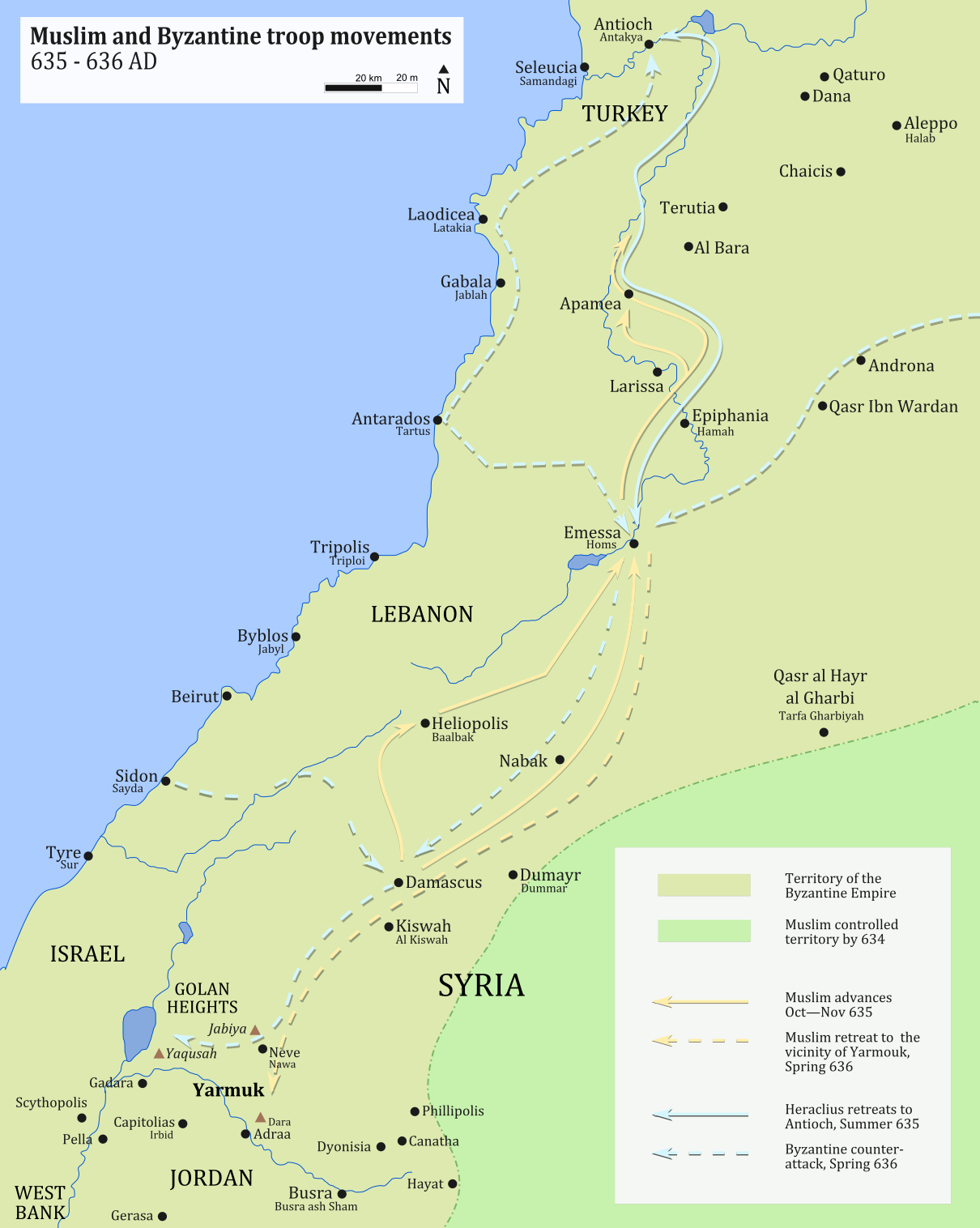
The Battle of Yarmouk was a decisive confrontation between the Muslim Arab forces and the Byzantine Empire, shaping the future of the region today known as Lebanon. The battle took place near the Yarmouk River, which flows along the borders of present-day Syria and Jordan. The confrontation was instigated by the rapid expansion of Muslim Arab forces under the Rashidun Caliphate, which sought to extend their influence into Byzantine-held territories.
The Byzantine Empire, at that time, was one of the most formidable military forces in the world, led by Emperor Heraclius. Despite their extensive experience and resources, the Byzantine forces were unprepared for the tactical ingenuity displayed by the Muslim Arab commanders, primarily Khalid ibn al-Walid. The Byzantine army was estimated to consist of approximately 100,000 troops, while the Muslim forces numbered around 20,000 to 40,000. Despite being outnumbered, the Muslim Arab forces used strategic mobility, effective communication, and innovative battle formations to their advantage.
The battle lasted for six days, during which the Muslim forces methodically outmaneuvered the Byzantines. A crucial factor in their victory was their ability to fragment the Byzantine lines, creating disarray and making it difficult for the Byzantine commanders to execute coordinated maneuvers. Additionally, the element of morale played a significant role. The Muslim soldiers were driven by a strong sense of purpose and religious fervor, which contrasted sharply with the Byzantine troops, whose morale was undermined by previous defeats and the logistical challenges of waging a prolonged campaign far from their supply bases.
The victory at Yarmouk had a profound and far-reaching impact. It effectively marked the end of Byzantine control over the Levant, paving the way for the Muslim Arab expansion throughout the region, including what is now modern Lebanon. This shift not only realigned political and military power but also initiated significant cultural and religious transformations across the conquered territories.
This battle underscored the decline of Byzantine influence in the region and the rise of Islamic power, which would go on to shape the historical and cultural landscape for centuries. It exemplifies a turning point where strategic innovation and religious motivation overcame numerical superiority.
#BattleofYarmouk #IslamicExpansion #ByzantineEmpire #LebanonHistory #MoofLife
Primary Reference
atlas-part-1.pdf

Explore the Life Moments of
 AI Twin