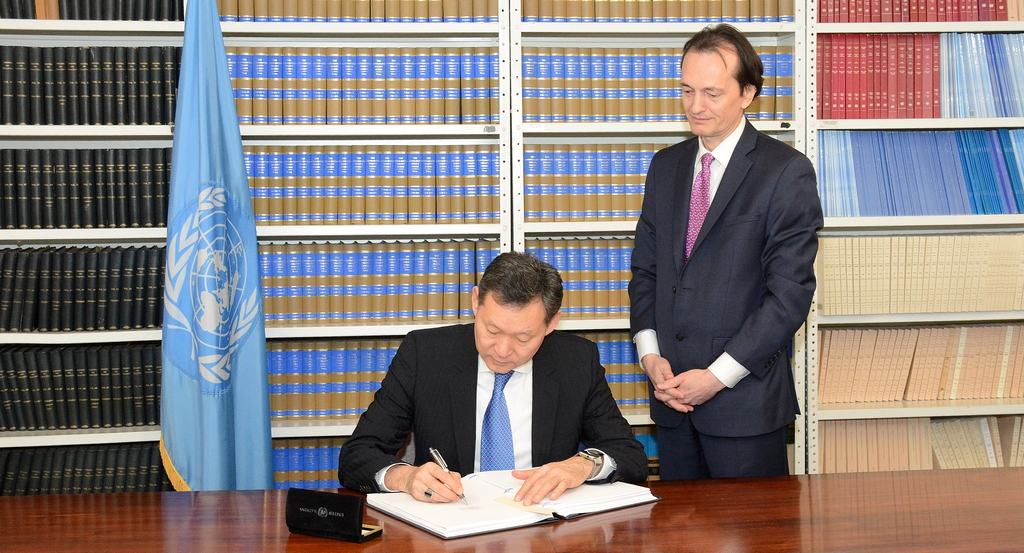
Kazakhstan Signed UN Treaty on the Prohibition of Nuclear Weapons
Kazakhstan
International Relations
Nuclear Policy
Disarmament
4 min read
Updated By: History Editorial Network (HEN)
Published:
Updated:
On 2 March 2018, the Republic of Kazakhstan officially signed the Treaty on the Prohibition of Nuclear Weapons (TPNW), becoming the 57th Member State to do so. This significant step reinforced Kazakhstan’s long-standing commitment to nuclear disarmament and global security.
Kazakhstan's role in nuclear disarmament is deeply rooted in its history. Following the dissolution of the Soviet Union in 1991, Kazakhstan inherited the world’s fourth-largest nuclear arsenal, consisting of over 1,400 nuclear warheads and an extensive testing site at Semipalatinsk. However, rather than retaining these weapons, Kazakhstan chose to voluntarily disarm, transferring the warheads to Russia and dismantling nuclear infrastructure with international support. This decision made Kazakhstan a global symbol of nuclear non-proliferation.
The TPNW, adopted by the United Nations General Assembly in 2017, is the first legally binding international agreement to comprehensively prohibit nuclear weapons. By signing this treaty, Kazakhstan reaffirmed its advocacy for a nuclear-free world and its active role in diplomatic efforts to eliminate nuclear threats. This action aligned with its earlier contributions, such as hosting negotiations on the Central Asian Nuclear-Weapon-Free Zone Treaty and promoting the International Day Against Nuclear Tests (29 August).
Kazakhstan's signature on the TPNW was not just a political move but a continuation of its moral and humanitarian stance against nuclear weapons. It symbolized a commitment to peace, security, and the prevention of catastrophic consequences associated with nuclear warfare.
#Kazakhstan #NuclearDisarmament #TPNW #UN #GlobalPeace #MomentsOfLife #MoofLife_Moment #MoofLife
Primary Reference
Kazakhstan

Explore the Life Moments of
 AI Twin