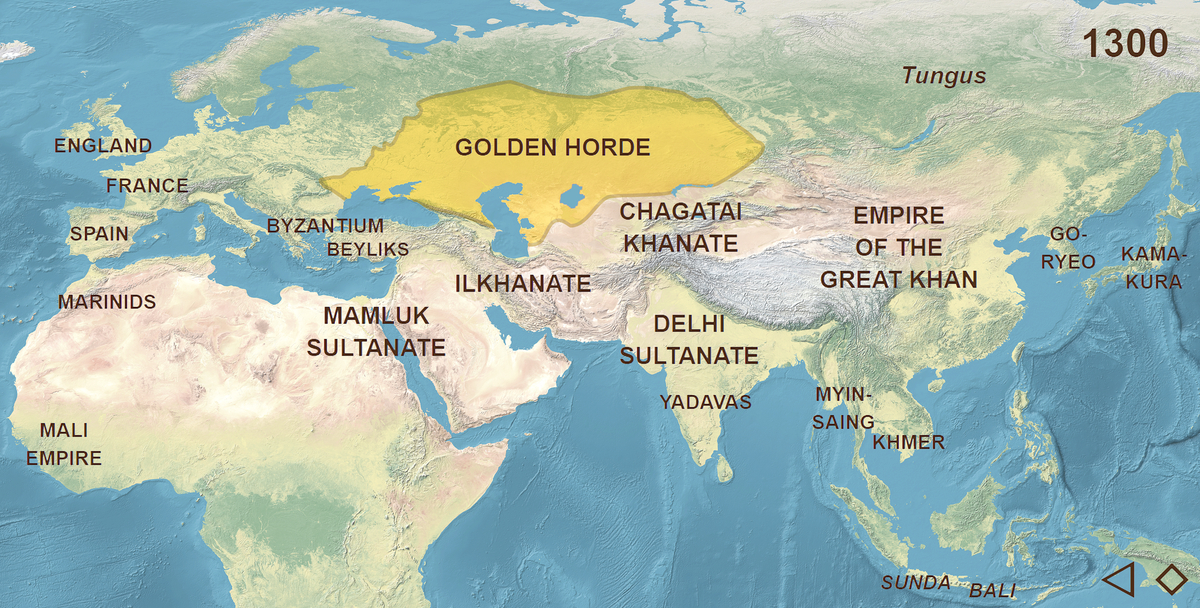
Kazakhstan came under the control of the Golden Horde
Kazakhstan
Culture
Kazakhstan
3 min read
Updated By: History Editorial Network (HEN)
Published:
Updated:
In 1259, following the division of the Mongol Empire, the territory that is now Kazakhstan came under the control of the Golden Horde, also referred to as the Ulus of Jochi. This period marked a significant transformation in the region's governance and culture. The Golden Horde established administrative districts known as Ulus, which facilitated the management of the vast territories they ruled. During this era, a unique Turco-Mongol tradition began to flourish among the ruling elite. The descendants of Genghis Khan, who had adopted Turkic customs and language, embraced Islam, which became a central aspect of their identity. This blend of Mongol and Turkic influences not only shaped the political landscape but also laid the groundwork for the cultural and religious development of the region. The Golden Horde's rule was characterized by a synthesis of nomadic and settled lifestyles, contributing to the rich tapestry of Kazakhstan's history. The legacy of this period is still evident today, as it played a crucial role in the formation of the Kazakh identity and the establishment of Islam as a significant cultural force in Central Asia. #mooflife #mof #MomentOfLife #GoldenHorde #Kazakhstan #MongolEmpire #Turco-mongolTradition #IslamInCentralAsia
Primary Reference
Kazakh Khanate

Explore the Life Moments of
 AI Twin