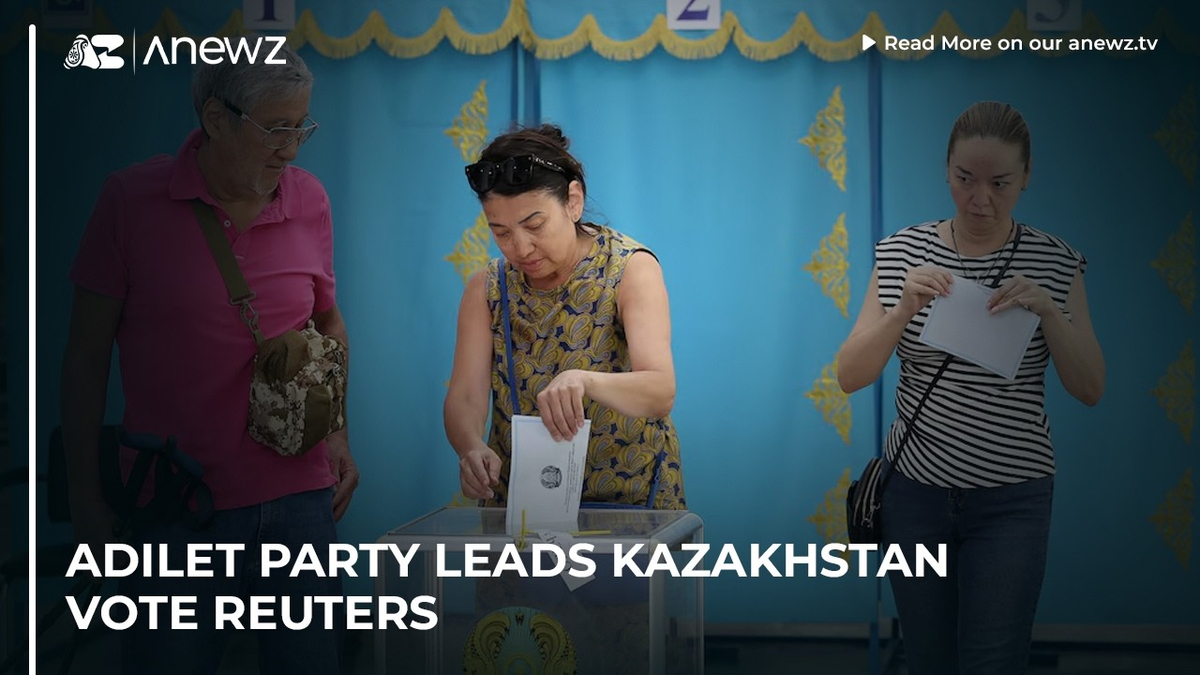
Ädilet Wins 110 Seats in Kazakhstan’s First Kurultai Election
Kazakhstan
Political
8 min read
Updated By: History Editorial Network (HEN)
Published:
Updated:
On 25/08/2026, Kazakhstan’s Central Election Commission officially confirmed that the pro-presidential Ädilet party won 71.17% of the vote and 110 of 145 seats in the country’s first election to the newly created unicameral Kurultai. The parliamentary election, held nationwide on 23/08/2026, introduced the legislature established under Kazakhstan’s new constitutional system and gave Ädilet more than three-quarters of all Kurultai seats.
According to the final Central Election Commission figures, Ädilet received 6,528,948 votes. The Auyl People’s Democratic Patriotic Party finished second with 574,621 votes, or 6.26%, securing 10 seats. Respublica received 509,631 votes, or 5.56%, and nine seats. The Aq Zhol Democratic Party won 478,083 votes, or 5.21%, receiving eight seats, while the Nationwide Social Democratic Party obtained 469,058 votes, or 5.11%, also taking eight seats. Together, these five parties filled all 145 seats.
Two other parties failed to reach the statutory 5% threshold. The People’s Party of Kazakhstan received 285,395 votes, or 3.11%, while the Baytaq Green Party received 97,751 votes, or 1.07%. Another 2.51% of participating voters selected the "against all" option.
Voter participation was also high. Of 12,623,289 registered voters, 9,351,539 participated, producing an official turnout of 74.08%. More than 9.35 million people therefore took part in choosing the members of the new legislature. The Central Election Commission reported that participation exceeded turnout in the March constitutional referendum by more than 224,000 voters.
The election represented the first nationwide parliamentary vote under Kazakhstan’s redesigned constitutional structure. The 145-member Kurultai replaced the former bicameral Parliament, which had consisted of the Mazhilis and Senate. The new constitution had been approved through a referendum earlier in 2026 and came into effect on 01/07/2026. All 145 Kurultai seats were contested through party lists, with parties required to pass the 5% national threshold to participate in the distribution of mandates.
Ädilet itself was a new force in the 2026 election. Created earlier in the year by figures closely associated with President Kassym-Jomart Tokayev, it absorbed the previously dominant Amanat party and positioned itself behind Tokayev’s political and economic programme. The four smaller parties that entered the Kurultai are also generally regarded as supportive of the presidential administration, despite differences in their stated political and economic priorities.
The election also took place amid wider changes to Kazakhstan’s political institutions. The new constitution established the office of vice president, and after voting on 23/08/2026 Tokayev said he expected to announce his nominee for the position within seven to ten days. The constitutional framework also altered the balance and organization of national institutions, while officials presented the new single-chamber parliament as a way of increasing legislative involvement in political decision-making.
With 110 seats, Ädilet emerged from the first Kurultai election with a commanding legislative majority. The result placed the party in a position to dominate the chamber’s initial organization and legislative agenda as Kazakhstan completed the transition from its former Senate-Mazhilis structure to the new unicameral system.
Historical Significance: The 23/08/2026 vote was notable not only for Ädilet’s electoral dominance but because it populated an entirely redesigned national legislature for the first time. The final results announced two days later established the political composition of Kazakhstan’s Kurultai at the beginning of the constitutional system introduced in 2026.
#Kazakhstan
#Ädilet
#Kurultai
#KazakhstanElection
#KassymJomartTokayev
#Astana
#CentralAsia

Explore the Life Moments of
 AI Twin