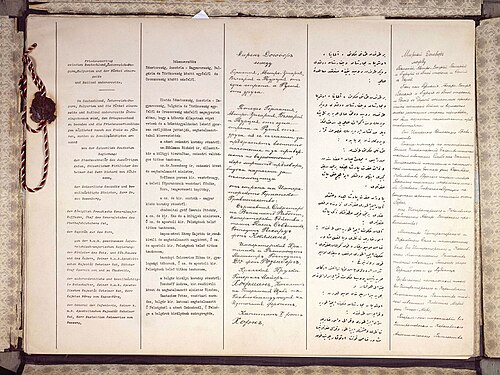
Treaty of Brest-Litovsk
Russia
International Relations
4 min read
Updated By: History Editorial Network (HEN)
Published:
Updated:
The Treaty of Brest-Litovsk was a pivotal agreement signed between the Central Powers and Soviet Russia, marking Russia's exit from World War I. The treaty resulted in significant territorial losses for Russia, as it ceded large areas including present-day Poland, Ukraine, Belarus, and the Baltic states to Germany and its allies. This decision was met with considerable backlash within Russia, particularly from factions such as the Left Socialist-Revolutionaries, who opposed the Bolshevik leadership's approach to peace negotiations. The treaty was seen as a betrayal of the revolutionary ideals that had initially fueled the Bolshevik rise to power, leading to internal dissent and the withdrawal of some parties from the coalition government. The Bolsheviks, who later rebranded themselves as the Russian Communist Party, faced criticism for prioritizing peace over territorial integrity, which they argued was necessary to consolidate power and focus on internal challenges, including civil unrest and economic instability.
The impact of the Treaty of Brest-Litovsk extended beyond immediate territorial changes. It allowed Germany to redirect its military resources to the Western Front, temporarily strengthening its position in the war. However, the treaty was short-lived, as the Central Powers faced defeat shortly thereafter, leading to the treaty's annulment. The loss of territory and the political fallout from the treaty contributed to the ongoing civil war in Russia, as various factions vied for power in the wake of the Bolshevik consolidation. The treaty's legacy is complex, as it not only reshaped the geopolitical landscape of Eastern Europe but also influenced the trajectory of the Russian Revolution and the subsequent establishment of the Soviet state.
#mooflife
#MomentOfLife
#TreatyOfBrest-litovsk
#RussianRevolution
#WorldWarI
#BolshevikParty
#EasternEurope

Explore the Life Moments of
 AI Twin