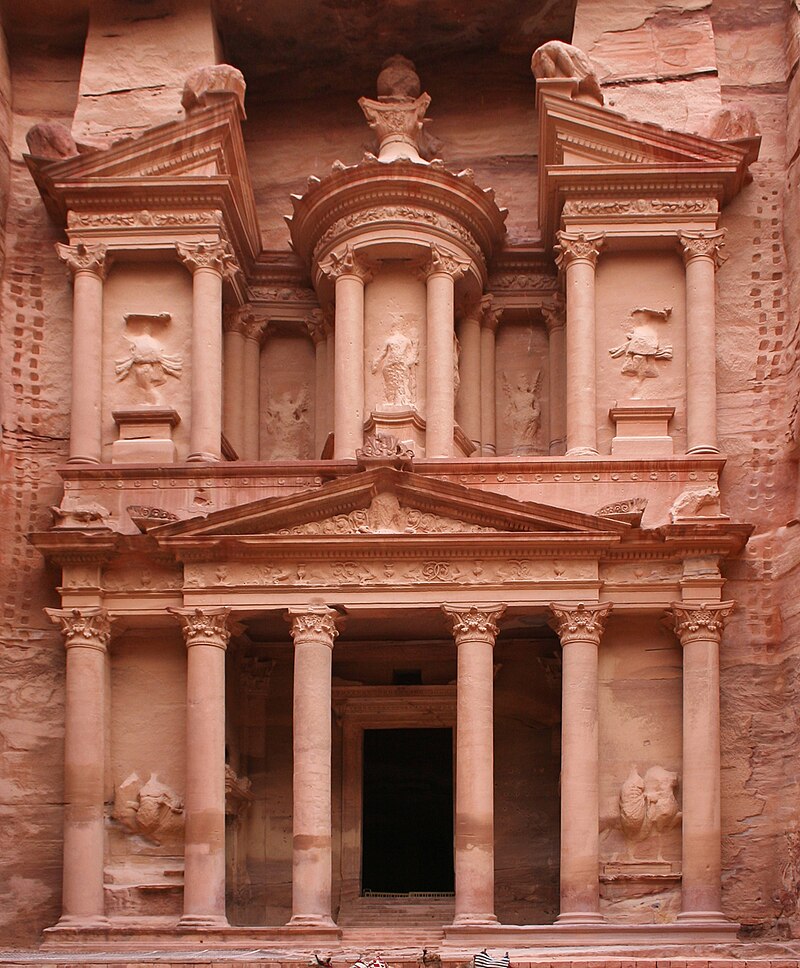
Petra's rise as Nabatean capital capturing ancient history and architectural wonder in the desert.
Jordan
CulturalHeritage
3 min read
Updated By: History Editorial Network (HEN)
Published:
The establishment of Petra as the capital of the Nabataean Kingdom was a pivotal moment in history. Situated at the crossroads of important trade routes, Petra grew into a flourishing city known for its impressive rock-cut architecture and advanced water management systems. The Nabataeans, skilled merchants, and craftsmen, utilized Petra's strategic location to amass wealth and power.
The shift of the Nabataean capital to Petra brought about significant economic growth and cultural development. The city became a center of trade, connecting the Arabian Peninsula, Egypt, Syria, and the Mediterranean world. The Nabataeans' control over trade routes allowed them to prosper, leading to the construction of elaborate tombs, temples, and theaters in Petra.
The establishment of Petra as the capital solidified the Nabataean Kingdom's influence in the region for centuries to come. The city's unique blend of Hellenistic, Egyptian, and Eastern architectural styles reflected the kingdom's cosmopolitan nature and served as a symbol of their prosperity and power.
Today, Petra stands as a UNESCO World Heritage Site and a testament to the once-thriving Nabataean civilization. The city's rock-cut structures, including the iconic Treasury (Al-Khazneh) and Monastery (Ad Deir), continue to attract visitors from around the world, showcasing the enduring legacy of the Nabataean Kingdom.
#Petra #NabataeanKingdom #TradeRoutes #CulturalHeritage #UNESCOWorldHeritageSite
Primary Reference
Petra Adventure Tours - Journeys International

Explore the Life Moments of
 AI Twin