President Adams Addresses Congress on French Maritime Policy Escalating Tensions and Threatening American Commerce
United States of America
Political
Global Trade
7 min read
Updated By: History Editorial Network (HEN)
Published:
Updated:
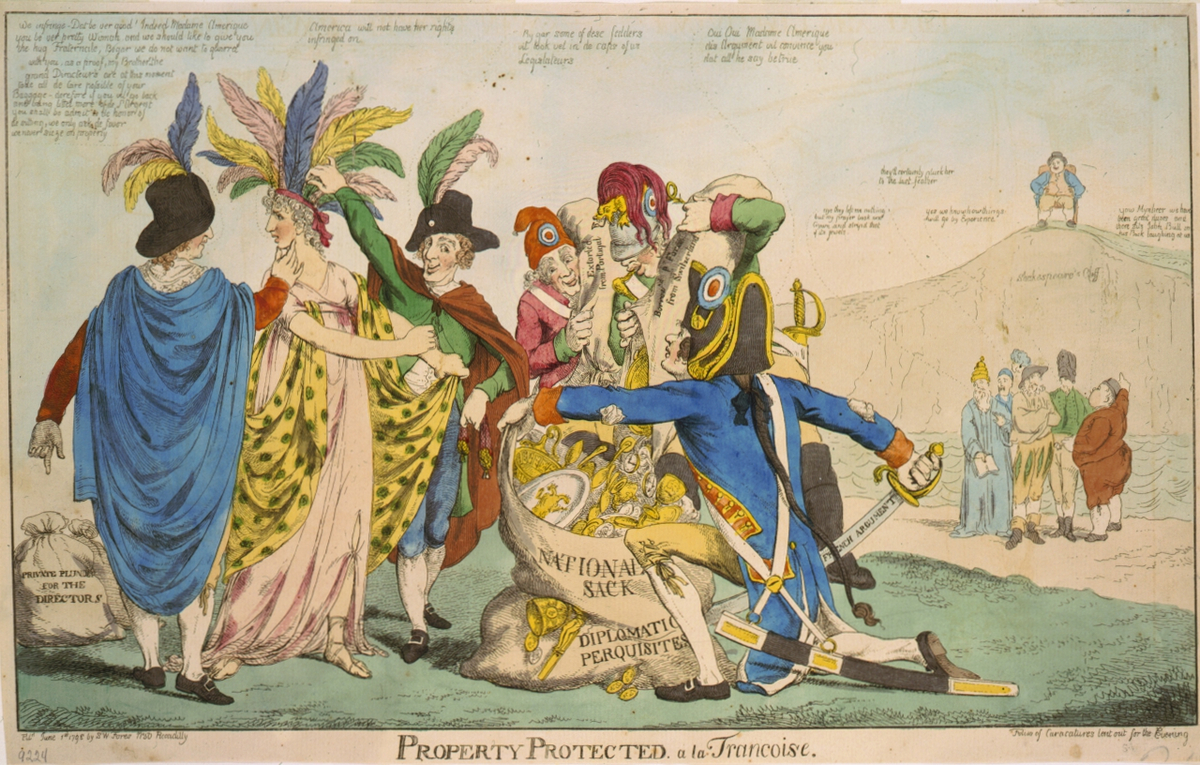
On March 5, 1798, President John Adams took a decisive step in addressing the XYZ Affair, a diplomatic crisis between the United States and France. On this day, Adams sent to Congress an un-encoded dispatch from the American envoys in France, detailing the French demands for bribes and loans as a precondition for negotiations. This revelation intensified tensions between the two nations and fueled anti-French sentiment in the U.S.
Background of the XYZ Affair
The XYZ Affair arose from deteriorating Franco-American relations. The French Directory, angered by the Jay Treaty (1794) between the U.S. and Britain, viewed it as a pro-British alliance and began seizing American ships. In response, Adams sent a diplomatic commission to Paris in 1797 to negotiate peace. However, French Foreign Minister Talleyrand sent three agents—later designated X, Y, and Z in official documents—who demanded a $250,000 bribe, a $10 million loan, and an American commitment to cover merchant losses due to French seizures before formal talks could even begin.
March 5, 1798: Adams’ Disclosure to Congress
On March 5, John Adams took a significant step by submitting one of the diplomatic dispatches to Congress, outlining the hostile treatment of American diplomats. Though he did not reveal the full extent of the scandal at this time, this initial communication marked the beginning of a turning point in public opinion and government response.
As more details emerged in April, the American public reacted with outrage. The demand for bribes was seen as an insult to U.S. sovereignty, and cries of “Millions for defense, but not one cent for tribute!” became a rallying cry against French aggression. The Federalists, led by Adams and Alexander Hamilton, used the scandal to push for military strengthening, while the Democratic-Republicans, led by Thomas Jefferson, remained skeptical of Adams' motives, fearing it was a ploy to justify war.
Consequences of Adams’ Actions
Military Buildup: Congress authorized the expansion of the U.S. Navy, including the construction of twelve new frigates, and passed measures to arm American merchant ships.
Quasi-War Begins: This undeclared naval conflict between the U.S. and France lasted from 1798 to 1800, with American ships engaging in battles against the French navy, primarily in the Caribbean.
Alien and Sedition Acts (1798): Amid fears of French influence, the Federalists passed laws targeting immigrants and restricting free speech, intensifying domestic political conflict.
Treaty of Mortefontaine (1800): Eventually, tensions cooled, and the U.S. and France negotiated a new treaty, formally ending the Quasi-War.
The XYZ Affair and Adams’ March 5, 1798 disclosure played a crucial role in shaping American foreign policy, reinforcing national unity against foreign threats, and establishing the U.S. as a nation unwilling to pay tribute for diplomatic relations.
#JohnAdams #XYZAffair #USHistory #DiplomaticCrisis #MomentsOfLife #MoofLife_Moment #MoofLife
Explore the Life Moments of
 AI Twin