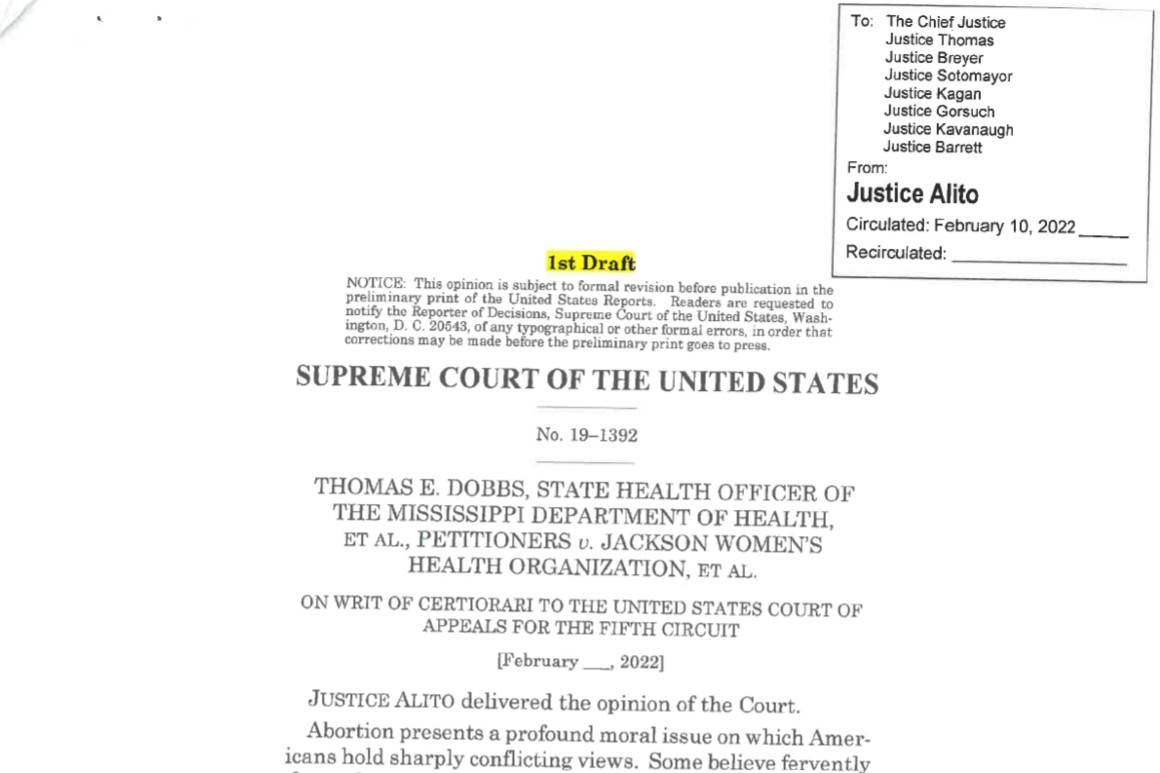
Leaked draft opinion in Dobbs v. Jackson Women’s Health Organization
United States of America
Legal
8 min read
Updated By: History Editorial Network (HEN)
Published:
In May 2022, a leak of the draft opinion in Dobbs v. Jackson Women’s Health Organization revealed that the U.S. Supreme Court was poised to overturn Roe v. Wade, the landmark 1973 decision that had established a constitutional right to abortion. The leak sparked intense debate across the nation, with voices from all sides weighing in on the potential implications of the decision. Among those speaking out was civil rights leader Reverend Jesse Jackson, whose comments drew a powerful historical analogy to one of the darkest moments in American legal history: Dred Scott v. Sandford (1857).
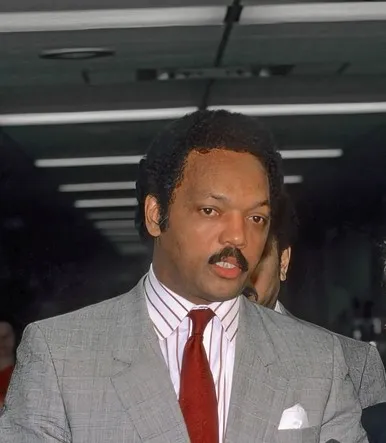
In his response to the leak, Jackson compared the draft decision to the infamous Dred Scott case, which had denied African Americans citizenship and reinforced the institution of slavery. Jackson's comparison was not merely rhetorical; he saw a parallel in how both decisions were underpinned by what he called “disingenuous campaigns” to present them as grounded in law rather than politics. He suggested that just as Dred Scott had been justified by legal arguments that ultimately served a political agenda, the potential overturning of Roe was similarly shaped by political forces that were disguised under the cloak of constitutional interpretation.
Jackson emphasized that the repercussions of such a ruling would be profound and far-reaching, warning that overturning Roe v. Wade would ignite fierce political battles at all levels of government and within civil society. He predicted that the decision would create conflict not only in state legislatures and Congress but also in the courts and even “on the streets.” Jackson’s prediction underscored the gravity of the moment, foreshadowing a period of heightened activism, legal challenges, and political polarization.
His comments were made against a backdrop of a deeply divided America, where abortion rights had long been a flashpoint in the culture wars. Jackson’s invocation of Dred Scott evoked a history of racial and civil rights struggles, linking the fight for reproductive rights with broader themes of personal liberty and state power. His argument was that both decisions—separated by more than 150 years—reflected the failure of the legal system to protect the most vulnerable members of society.
Indeed, just as Jackson predicted, the Supreme Court’s final decision in Dobbs v. Jackson came in June 2022, officially overturning Roe v. Wade. This ruling returned the power to regulate abortion to the individual states, leading to a patchwork of laws across the country, with some states enacting strict bans and others moving to protect abortion access. As Jackson had warned, the aftermath of the ruling sparked protests, legal battles, and significant political realignment around reproductive rights, highlighting the deep divisions in American society over the issue.
Jackson’s historical analogy to Dred Scott resonated with many who saw the potential rollback of rights as a broader trend of judicial decisions that disproportionately affect marginalized groups. His remarks also served as a reminder of the enduring legacy of civil rights struggles in the United States, connecting past and present in a way that highlighted the stakes of the ongoing fight for justice.
The comparison between Dobbs and Dred Scott became part of the larger narrative surrounding the ruling, with activists, legal scholars, and political leaders debating the implications for civil liberties and human rights. Jackson’s prediction that the ruling would be a catalyst for widespread political and social conflict has proven prescient, as the battle over abortion rights continues to shape the political landscape of the United States.
#MomentsOfLife #MoofLife_Moment #MoofLife #JesseJackson #DobbsvJackson #RoeVWade #DredScott #CivilRights #ReproductiveRights #SupremeCourt #AmericanHistory
Primary Reference
Jesse Jackson
Explore the Life Moments of
 AI Twin