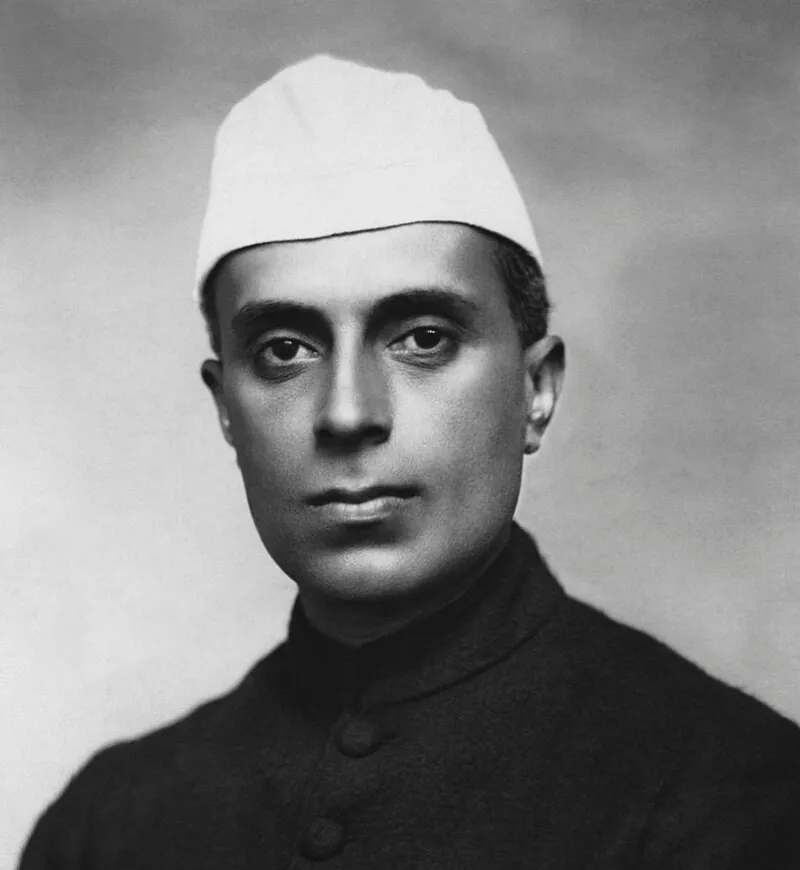
Jawaharlal Nehru: Prime Minister and Foreign Minister post-independence, shaping India's democratic and foreign policies.
India
Political
Global Trade
5 min read
Updated By: History Editorial Network (HEN)
Published:
After India's first general elections, Jawaharlal Nehru continued his role as Prime Minister and took on the additional responsibility of Union Minister for External Affairs. This period marked a foundational phase for India, transitioning from British colonial rule to becoming an autonomous republic. The general elections, noted for being the world's largest democratic exercise at the time, involved around 173 million eligible voters, out of which more than 84 million exercised their right to vote.
Nehru's dual role came at a critical juncture, as India was navigating post-independence challenges that included the integration of princely states, economic development, and socio-cultural integration. As Prime Minister, Nehru focused on building a secular, sovereign, and democratic nation, while advocating for socialist-based economic policies aiming at poverty alleviation and infrastructure development.
As Union Minister for External Affairs, Nehru's strategies were pivotal in shaping India’s foreign policy. His non-alignment principle played a significant role during the Cold War, allowing India to maintain equidistance from both the Western and Eastern blocs. Nehru also advocated for anti-colonialism and supported newly independent countries in Africa and Asia.
Nehru’s leadership influenced India's internal and external policies comprehensively. It set the course for future economic planning, including the establishment of the Planning Commission and the introduction of Five-Year Plans that aimed to drive industrialization and self-reliance. On the international front, his non-alignment policy not only garnered respect for India but also enabled it to play a prominent role in the creation of the Non-Aligned Movement in the subsequent years.
In consolidating his roles, Nehru laid down a path for India's parliamentary democracy and ethical governance. His efforts contributed significantly to the nation’s initial steps in the global arena and its domestic economic framework. This period not only established Nehru's vision but also charted a forward-looking path for independent India’s socio-economic and diplomatic trajectory.
#MoofLife #IndiaElections #JawaharlalNehru #DemocracyInIndia #NonAlignmentPolicy #PostColonialIndia
Primary Reference
Jawaharlal Nehru - Wikipedia
Explore the Life Moments of
 AI Twin