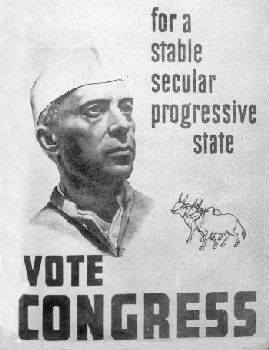
India’s First General Election: Nehru’s Vision for Progress and Stability
India

Political
5 min read
Updated By: History Editorial Network (HEN)
Published:
After India gained independence, the country faced the monumental task of establishing a democratic framework. The Indian National Congress, led by Jawaharlal Nehru, prepared to contest in the first general election, aiming to implement reforms and steer the nation towards stability and growth. The election was a massive logistical challenge, involving approximately 173 million voters, many of whom were first-time voters unfamiliar with the electoral process. The government undertook extensive voter education campaigns, and the election commission organized the polling process across diverse and sprawling geographies.
Nehru, advocating for a socialist economic policy and secular democratic values, became the face of the Congress campaign. The party's agenda focused on social reforms, industrialization, agricultural development, and defense of civil rights. Under Pandit Nehru's leadership, Congress effectively communicated its vision to the electorate, which was resonant with the population's aspirations for a progressive future.
The results of the election saw the Indian National Congress securing an overwhelming majority, winning 364 out of the 489 seats in the Lok Sabha, the lower house of India's Parliament. This victory not only affirmed Congress's dominance in Indian politics but also endorsed Nehru's leadership and vision for newly-independent India.
The successful conduct of the election was also a landmark achievement for democracy in the country, setting a precedent for future electoral processes. It marked the initiation of a political culture of competitive elections in the world's largest democracy. The election process underscored the commitment of both the Indian government and its citizens to democratic ideals.
The impact of this event was multifaceted. On a political level, it solidified Jawaharlal Nehru's position as a pivotal leader in India's formative years. Economically, it paved the way for the implementation of policies aimed at modernization and development. Socially, the election instilled a sense of empowerment and participation among the Indian populace.
#NehruLeads #IndianPolitics #ElectionHistory #IndiaDemocracy #MoofLife
Primary Reference
1951–52 Indian general election - Wikipedia
Explore the Life Moments of
 AI Twin