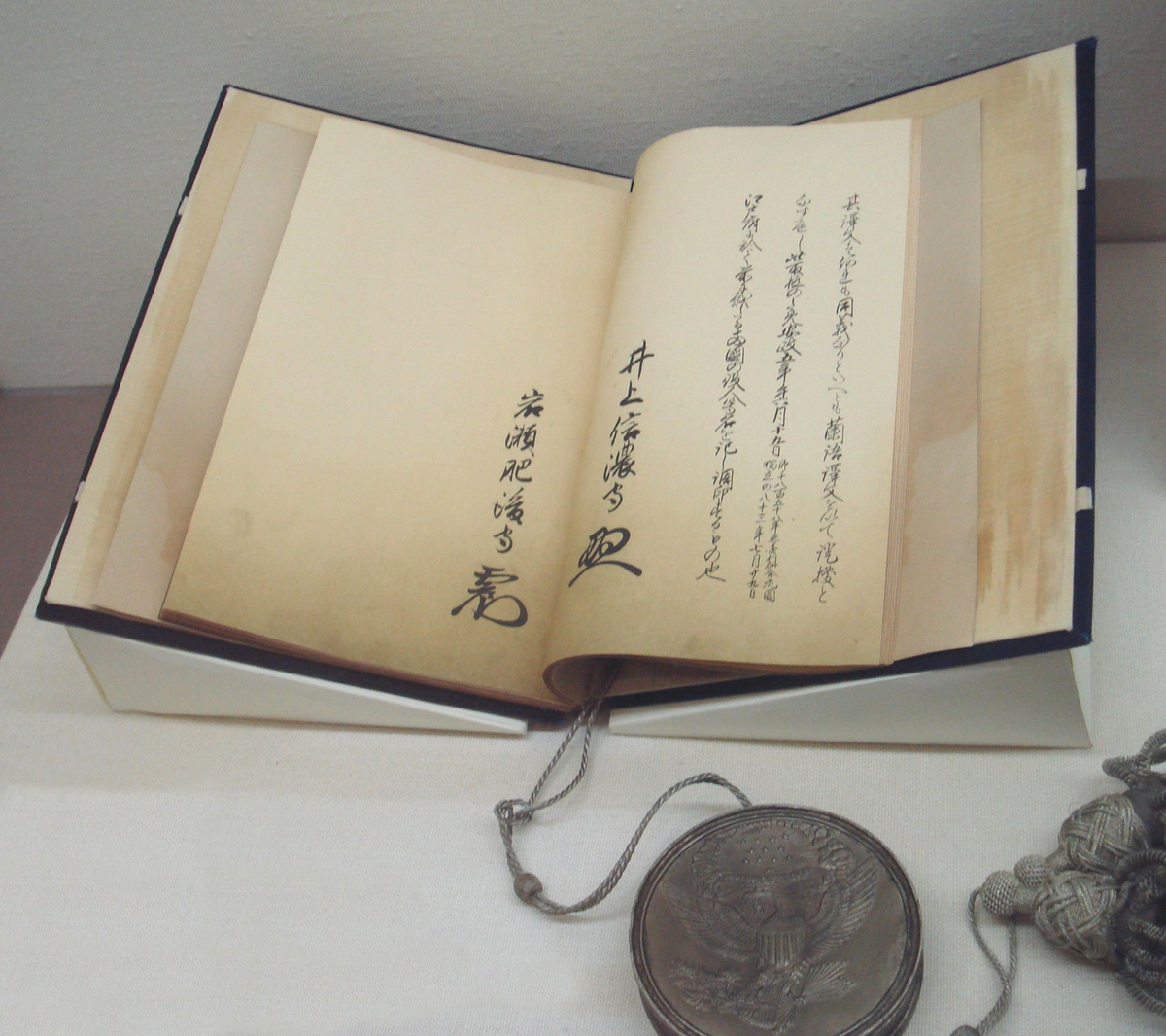
Treaty between United States and Japan
Japan
Political
3 min read
Updated By: History Editorial Network (HEN)
Published:
In 1858, the Harris Treaty was signed between the United States and Japan, marking a significant milestone in the diplomatic relations between the two nations. The treaty, negotiated by Townsend Harris, the first U.S. Consul General to Japan, aimed to establish trade and diplomatic relations between the two countries after years of isolationist policies in Japan.
Prior to the treaty, Japan had implemented a policy of sakoku, which restricted foreign influences and trade. The Harris Treaty helped to open up Japan to the rest of the world by granting American ships access to Japanese ports for refueling and provisions. It also allowed for the establishment of a U.S. Consulate in Japan, paving the way for further diplomatic negotiations.
The signing of the Harris Treaty had a profound impact on Japan, as it signaled the end of its isolationist stance and the beginning of a period of modernization and westernization. The treaty set a precedent for future agreements with other Western powers, leading to the eventual abolition of the feudal system and the establishment of a more centralized government in Japan.
Overall, the Harris Treaty was a crucial turning point in Japanese history, opening the country up to the global community and setting in motion a series of reforms that would transform Japan into a modern industrialized nation.
#HarrisTreaty #Diplomacy #USJapanRelations #TradeRelations #Modernization #HistoricAgreement

Explore the Life Moments of
 AI Twin