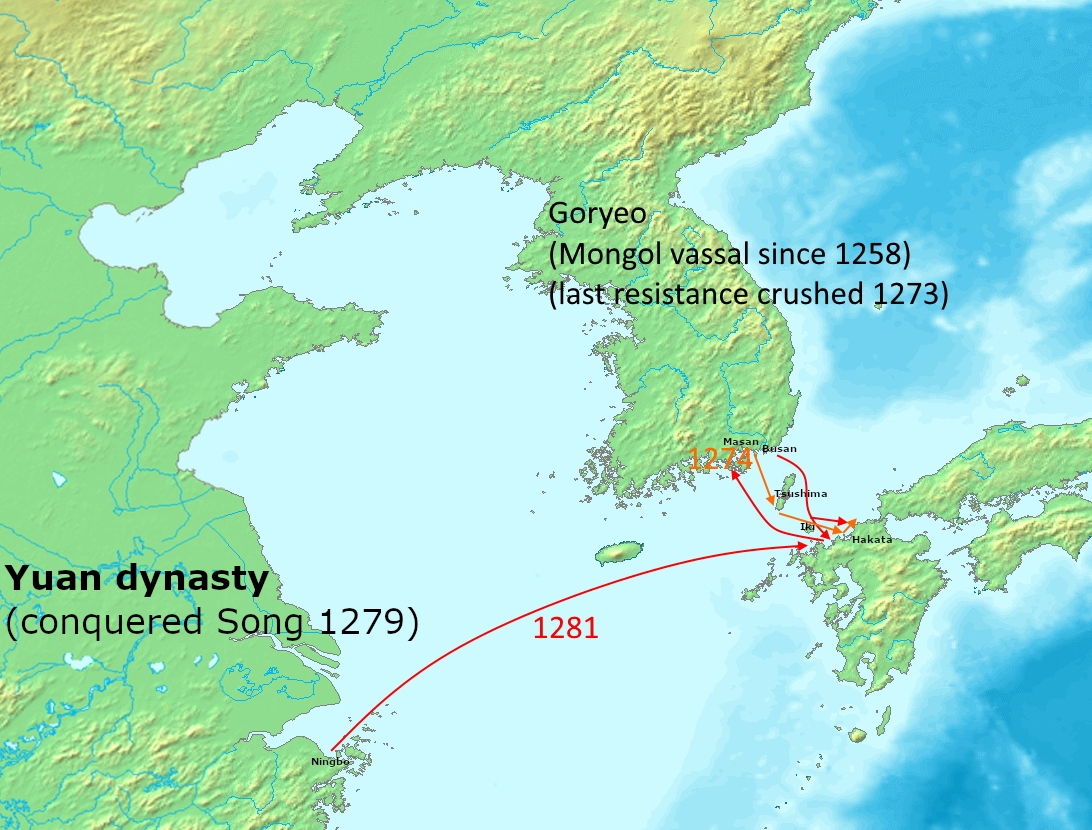
Divine wind defeats Mongol invasions.
Japan

Military
4 min read
Updated By: History Editorial Network (HEN)
Published:
In the 13th century, the Mongol Empire, under Kublai Khan's leadership, set its sights on expanding into Japan. The Mongols launched two massive invasions, in an attempt to conquer the island nation. However, both attempts were thwarted by a powerful typhoon that struck the Mongol fleet. This natural disaster, known as Kamikaze or 'divine wind', decimated the Mongol navy and saved Japan from certain invasion.
The first invasion, in the year prior to the Kamikaze event, had already been partially neutralized by storms. The second invasion, composed of even larger Mongol forces, faced a similar fate due to the typhoon. The Kamikaze not only destroyed a significant portion of the Mongol fleet but also disrupted their coordination and morale, forcing them to retreat. The Japanese, under the leadership of samurai warriors and with the advantage of the storm, successfully defended their homeland.
The Kamikaze event had a profound impact on Japan's history. It solidified the belief among the Japanese people that they were divinely protected and gave rise to the concept of the Kamikaze as a symbol of their national identity. The failed Mongol invasions also highlighted the effectiveness of Japan's defensive strategies, including coastal defenses and the use of superior naval tactics. This event marked a turning point in Japan's relations with foreign powers, as it demonstrated the island nation's ability to repel foreign invasions.
Today, the Kamikaze event remains a prominent part of Japan's historical narrative, symbolizing the country's resilience and unity in the face of adversity. It serves as a reminder of the power of nature and the importance of strategic defense in protecting national sovereignty. The legacy of the Kamikaze continues to inspire pride and patriotism in the Japanese people. #JapaneseHistory #MongolInvasions #KamikazeTyphoon #SamuraiWarriors

Explore the Life Moments of
 AI Twin