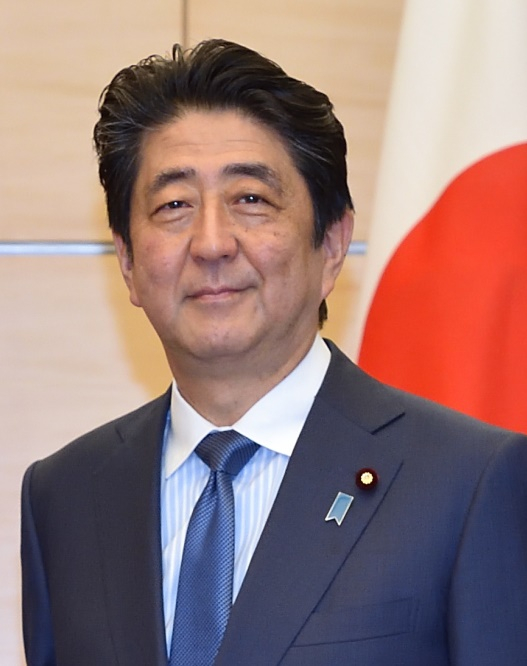
Shinzo Abe becomes Prime Minister of Japan for the first time.
Japan
9 min read
Updated By: History Editorial Network (HEN)
Published:
On December 28, 2012, Shinzo Abe was inaugurated as Prime Minister of Japan, marking the beginning of his second term in office. This event was significant not only because it brought Abe back to the position he had briefly held from 2006 to 2007 but also because it heralded a new era of political stability and economic reform in Japan.
Shinzo Abe, born into a prominent political family, was the grandson of former Prime Minister Nobusuke Kishi and the son of Shintaro Abe, a former foreign minister. His deep political roots provided him with a profound understanding of Japan's political landscape and strategic interests. After resigning from his first term as prime minister in 2007 due to health issues and political pressure, Abe spent several years rebuilding his political career and refining his vision for Japan.
In the years leading up to his second premiership, Japan faced numerous challenges, including economic stagnation, deflation, and political instability, with six prime ministers in as many years. The public's frustration with the ruling Democratic Party of Japan (DPJ) and their handling of these issues culminated in a landslide victory for the Liberal Democratic Party (LDP) in the December 2012 general election. As the leader of the LDP, Abe's return to power was seen as a potential turning point for the country.
Upon taking office, Abe introduced a comprehensive economic policy package known as "Abenomics," designed to revive Japan's sluggish economy. Abenomics was built on three main pillars: aggressive monetary easing, flexible fiscal policy, and structural reforms to stimulate growth. The monetary easing policy aimed to combat deflation and encourage investment by increasing the money supply and lowering interest rates. The fiscal stimulus sought to boost economic activity through government spending on infrastructure and other projects. Structural reforms focused on enhancing productivity, labor market flexibility, and encouraging innovation.
Abenomics showed early signs of success, with Japan experiencing economic growth and an increase in employment rates. However, the policies also faced criticism and challenges, particularly regarding their long-term sustainability and the impact of Japan's significant public debt.
In addition to economic reforms, Abe's tenure was marked by efforts to strengthen Japan's national security and revise its pacifist post-World War II constitution. His administration sought to reinterpret Article 9 of the Japanese constitution, which renounces war and prohibits the maintenance of armed forces. This reinterpretation allowed Japan to exercise collective self-defense, enabling it to come to the aid of allies under attack, a move that was both lauded and criticized domestically and internationally.
Abe also focused on bolstering Japan's alliances, particularly with the United States, and expanding its role in regional and global security frameworks. His foreign policy initiatives aimed to counterbalance China's rising influence in the Asia-Pacific region, which included efforts to strengthen ties with other democratic nations in the region, such as India and Australia.
Culturally, Abe's tenure was marked by efforts to promote traditional Japanese values and national pride. His administration supported various cultural initiatives and sought to enhance Japan's global cultural presence, including through events like the 2020 Tokyo Olympics, which, despite being postponed to 2021 due to the COVID-19 pandemic, were seen as a symbol of Japan's resilience and global standing.
Shinzo Abe's second term as prime minister, beginning in 2012, was a period of significant economic, political, and cultural shifts in Japan. His policies and leadership style left a lasting impact on the country, shaping its trajectory in the years that followed. Despite stepping down in 2020 due to health issues, Abe remained an influential figure in Japanese politics until his assassination in 2022, and his legacy continues to influence Japan's economic and political landscape.
#MomentsOfLife #MoofLife_Moment #MoofLife #ShinzoAbe #Abenomics #JapanesePolitics #EconomicReform #NationalSecurity #JapanLeadership #LDP

Explore the Life Moments of
 AI Twin