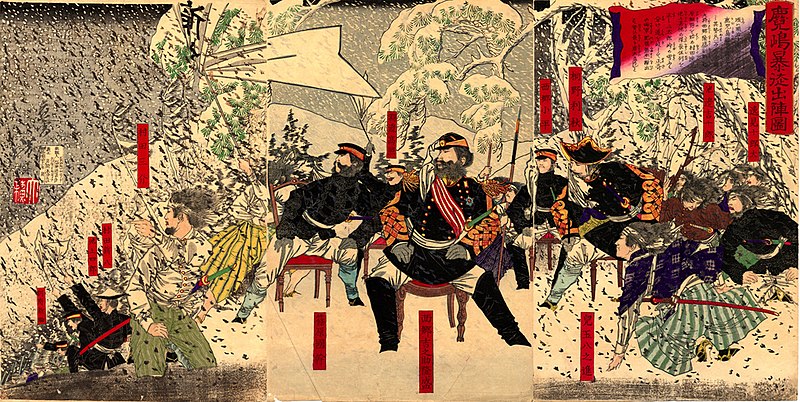
Samurai-led Satsuma Rebellion against Meiji government
Japan

4 min read
Updated By: History Editorial Network (HEN)
Published:
In Japan, the Satsuma Rebellion saw samurai leading a revolt against the Meiji government. The samurai, disenchanted with the modernization and westernization efforts of the government, aimed to restore power to the traditional feudal authorities. Initially triggered by economic hardships and loss of status, the rebellion quickly escalated into a full-scale armed conflict.
The Satsuma clan, known for its fierce and loyal samurai warriors, played a central role in the rebellion. Led by Saigō Takamori, a prominent samurai and key figure in the Meiji Restoration, they sought to challenge the centralizing policies of the new government.
The rebellion took place primarily on the island of Kyushu, where the samurai forces clashed with the imperial army. Despite initial successes, including the capture of several key strongholds, the rebels were eventually outnumbered and outgunned. The imperial forces, bolstered by modern weapons and a more organized military structure, gradually gained the upper hand.
The decisive battle of Shiroyama marked the end of the rebellion, with Saigō and his remaining followers making a final and futile stand against the imperial army. Saigō was killed in the battle, bringing an end to the uprising. The rebellion resulted in a significant loss of life on both sides and highlighted the challenges of reconciling traditional values with modernization efforts in Japan.
The aftermath of the Satsuma Rebellion had far-reaching consequences. It marked the end of the samurai as a political force in Japan, solidifying the central authority of the Meiji government. The rebellion also paved the way for further modernization and industrialization efforts in the country, ultimately shaping Japan into the modern nation it is today.
#SatsumaRebellion #SamuraiUprising #MeijiGovernment #JapaneseHistory

Explore the Life Moments of
 AI Twin