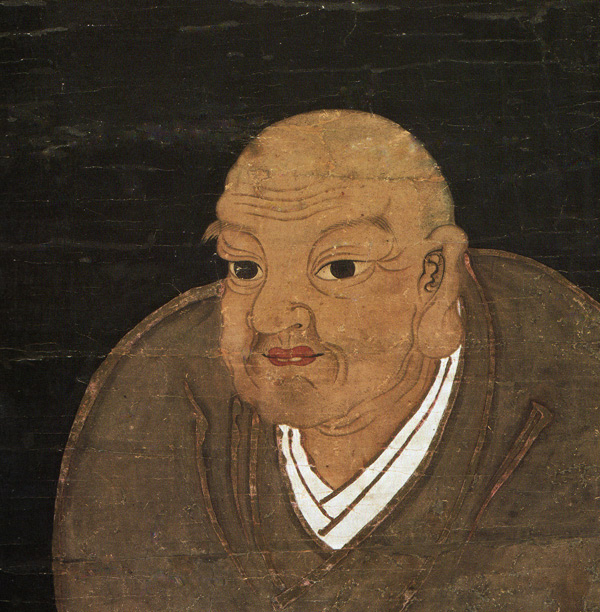
Nichiren's inscription of the Dai-Gohonzon.
Minobu region, Japan
Religion
4 min read
Updated By: History Editorial Network (HEN)
Published:
Updated:
On 12/10/1279, the Japanese Buddhist priest Nichiren (1222–1282) is said, within certain traditions, to have inscribed the Dai-Gohonzon, a large mandala intended as an object of devotion. This event is particularly emphasized in the teachings of Nichiren Shōshū, which regard the Dai-Gohonzon as a central expression of Nichiren’s religious mission. The inscription is believed to have taken place during the late Kamakura period, when Nichiren was residing in the region of Mount Minobu, where he spent his later years teaching and writing.
Nichiren’s teachings focused on devotion to the Lotus Sutra and the chanting of its title, Nam-myoho-renge-kyo, as a path to enlightenment. Throughout his life, he faced opposition from established Buddhist institutions and political authorities, including exile to Izu and Sado Island. By 1279, his movement had developed a following among both lay supporters and disciples. The tradition holds that the Dai-Gohonzon was inscribed as a mandala embodying the principles of the Lotus Sutra, intended for the spiritual benefit of believers.
It is important to note that the significance and interpretation of the Dai-Gohonzon vary among different Nichiren Buddhist schools. While Nichiren Shōshū places particular emphasis on this object, other branches of Nichiren Buddhism focus more broadly on his writings and teachings as preserved in various mandalas and texts. The date remains an important point of reference within specific lineages that trace their practice to this tradition.
Why This Moment Matters:
The 1279 inscription is regarded within certain traditions as a key expression of Nichiren’s teachings, illustrating how religious authority and practice were transmitted through specific devotional objects in medieval Japan.
#Nichiren
#NichirenBuddhism
#KamakuraPeriod
#LotusSutra
#JapaneseHistory
Primary Reference
Dai Gohonzon

Explore the Life Moments of
 AI Twin