First of the Mongol Invasions: Prelude to Conflict
Hakata Bay, Kyushu, Japan
Military
4 min read
Updated By: History Editorial Network (HEN)
Published:
Updated:
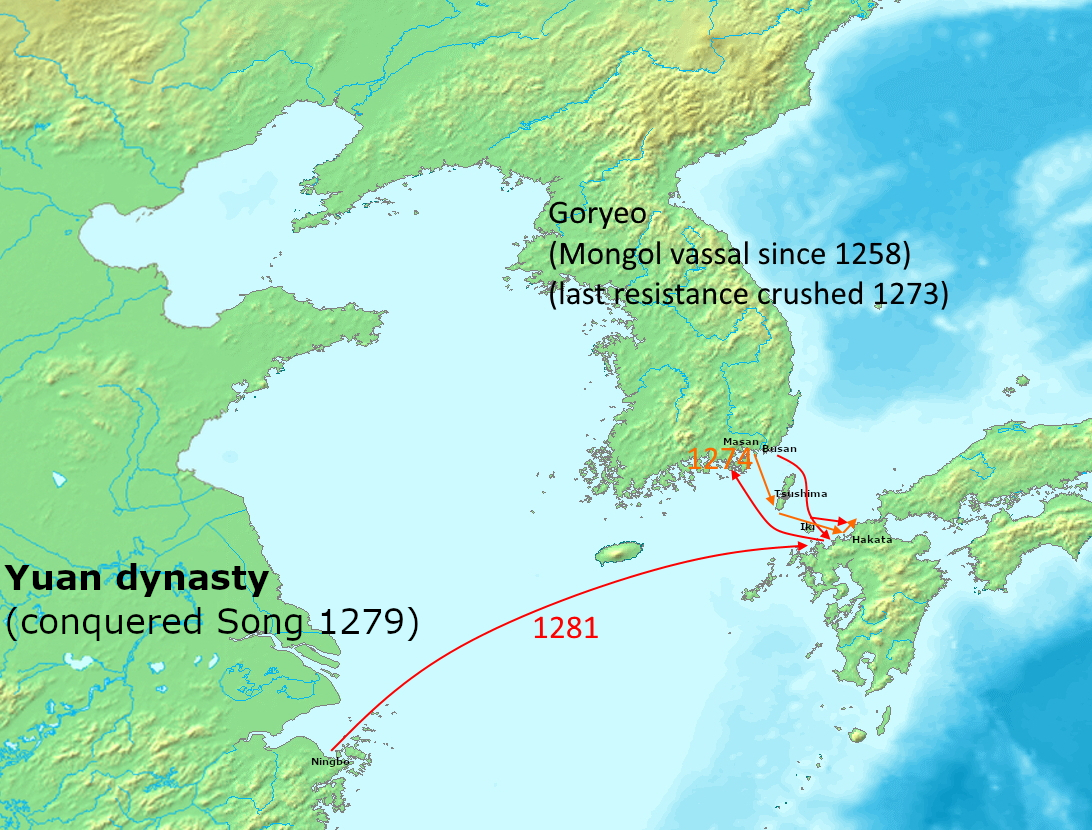
On 19/11/1274, the First Mongol Invasion of Japan reached its climax with the Battle of Bun’ei, as forces of the Mongol-led Yuan dynasty confronted the Kamakura shogunate’s defenses on the northern coast of Kyushu. The invasion force, organized under Kublai Khan, included Mongol, Korean, and Chinese troops who departed from the Korean Peninsula and landed at Hakata Bay. This marked the first large-scale foreign military incursion into Japan during the Kamakura period.
The invading army introduced coordinated infantry tactics, explosive projectiles, and massed formations that differed from the more individual combat style of the Japanese samurai. Initial clashes saw the Mongol forces gain ground against local defenders. However, as fighting continued along the coastline, resistance from Japanese forces slowed their advance. By nightfall, the invaders withdrew to their ships, and during the night, a storm struck the fleet, damaging vessels and contributing to the decision to retreat the following day.
The events of 1274 prompted the Kamakura shogunate to strengthen coastal defenses, including the construction of stone walls along Hakata Bay. A second, larger invasion attempt followed in 1281 but was also repelled. The 1274 campaign remains the first recorded instance of Japan confronting a coordinated foreign invasion force.
Historical Significance:
The invasion led to defensive reforms by the Kamakura shogunate and established a precedent for organized resistance against external military threats.
#MongolInvasion
#BattleOfBunei
#KamakuraPeriod
#KublaiKhan
#JapaneseHistory

Explore the Life Moments of
 AI Twin