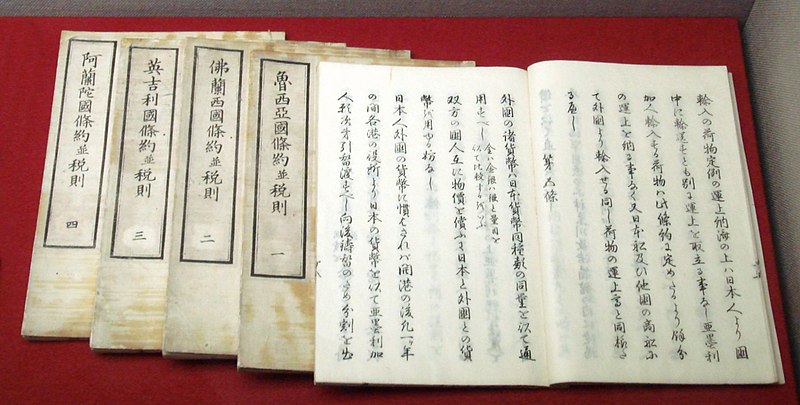
Netherlands & Japan Trade Agreement Signed
Japan

Global Trade
Economic Cooperation
4 min read
Updated By: History Editorial Network (HEN)
Published:
In 1858, the Netherlands and Japan came together to establish a trade agreement that would significantly impact their economies. This agreement was a result of Japan's efforts to open up its ports to foreign trade, ending centuries of isolationist policies. The Dutch, a key player in global trade at the time, saw this as an opportunity to expand their commerce in the East.
The trade agreement marked a turning point for Japan, as it propelled the nation into the modern era of international trade. It allowed for the exchange of goods between the two countries, with the Dutch importing Japanese silk, tea, and ceramics, while exporting textiles, weapons, and other Western products to Japan. This trade partnership helped boost economic growth and cultural exchange between the two nations.
Furthermore, the agreement facilitated the transfer of knowledge and technology between the Netherlands and Japan. Dutch expertise in areas such as shipbuilding, agriculture, and medicine benefitted the Japanese, while the Dutch gained insights into Japanese craftsmanship and traditions. This exchange of skills and ideas laid the groundwork for future collaborations and innovation.
The Netherlands and Japan's trade agreement was a stepping stone towards greater economic cooperation and diplomacy between the two nations. It set a precedent for future trade treaties with other Western powers, paving the way for Japan's rapid modernization and integration into the global economy. The lasting impact of this agreement can still be felt today in the strong economic ties and cultural exchanges between the two countries.
#Netherlands #Japan #TradeAgreement #EconomicCooperation #CulturalExchange
Explore the Life Moments of
 AI Twin