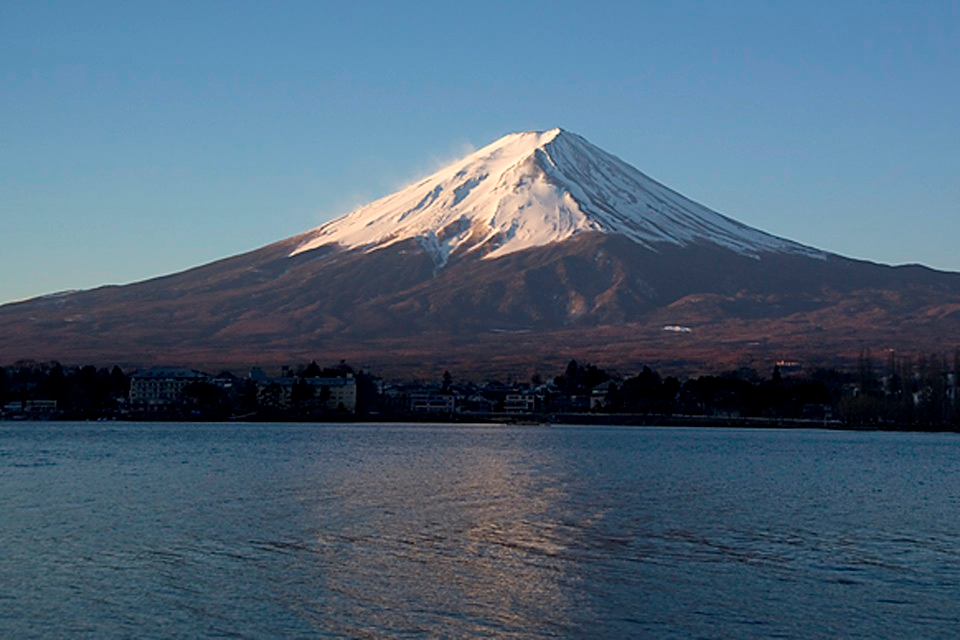
Earliest eruption of Mt. Fuji
Mount Fuji, Japan

Science Event
4 min read
Updated By: History Editorial Network (HEN)
Published:
Updated:
On 31/07/0781, the earliest known recorded eruption of Mount Fuji was documented in Japanese historical records, marking the first time the volcano’s activity entered written history. The date corresponds to the 6th day of the 7th month in the 1st year of the Ten'ō era. Although Mount Fuji had been volcanically active for approximately 100,000 years prior, this event represents the transition from geological evidence to human observation, providing one of the earliest written accounts of volcanic activity in Japan.
The eruption occurred during the Nara period (710–794), a time when the imperial court maintained official chronicles that recorded natural events alongside political and religious developments. While surviving records of the 781 eruption are limited in detail, its documentation established a reference point for subsequent observations of Mount Fuji’s activity. This eruption is often associated with what later scholars describe as the beginning of the “Old Fuji” stage in historical documentation, distinguishing earlier undocumented volcanic phases from those recorded by human observers.
Mount Fuji’s eruptions over centuries contributed to shaping its symmetrical volcanic cone and the surrounding landscape in central Japan. The 781 record provided an early framework for tracking volcanic patterns, which would later include more detailed accounts, such as the Jōgan eruption of 864–866. Today, Mount Fuji remains an active stratovolcano and a significant cultural and geographical landmark, recognized as a UNESCO World Heritage Site since 2013.
#MtFuji
#volcaniceruption
#Japan
#historicalevent
Primary Reference
Mount Fuji

Explore the Life Moments of
 AI Twin