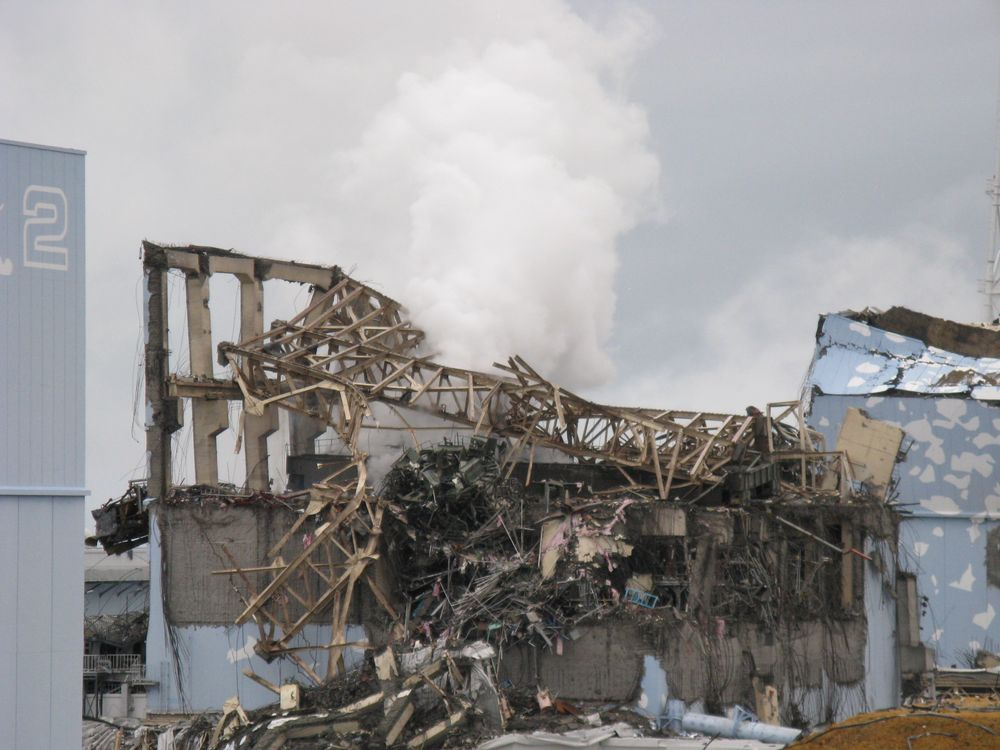
Disaster at Fukushima Daiichi nuclear plant.
Japan
Disaster
Environmental
4 min read
Updated By: History Editorial Network (HEN)
Published:
In March 2011, a catastrophic earthquake struck off the eastern coast of Japan, triggering a massive tsunami that inundated the Fukushima Daiichi nuclear power plant. The natural disasters caused a power outage and crippled the plant's cooling systems, leading to a series of nuclear meltdowns and hydrogen-air explosions in the following days.
The Fukushima Daiichi nuclear disaster was rated a level 7 on the International Nuclear Event Scale, the highest classification. It was the most severe nuclear accident since the Chernobyl disaster in 1986. The release of radioactive materials contaminated the surrounding area, forcing the evacuation of approximately 154,000 residents from the exclusion zone. The long-term health effects of the radiation exposure remain a concern.
The Japanese government established a 20-kilometer exclusion zone around the plant, where entry is still restricted. Decontamination efforts have been ongoing in the affected areas, but full recovery is far from complete. The disaster had significant repercussions on Japan's energy policies, leading to the shutdown of all nuclear power plants in the country and a push for renewable energy sources.
The Fukushima Daiichi nuclear disaster serves as a stark reminder of the devastating impact natural disasters can have on infrastructure and human lives. It underlines the importance of stringent safety measures in nuclear facilities and effective emergency preparedness plans.
#FukushimaDaiichi #NuclearDisaster #Japan #Earthquake #Tsunami #RadiationExposure #RenewableEnergy #SafetyMeasures.
Explore the Life Moments of
 AI Twin